




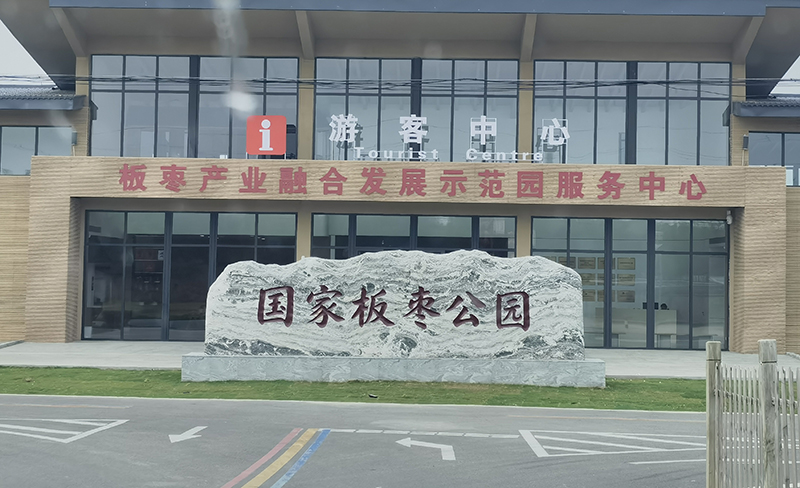
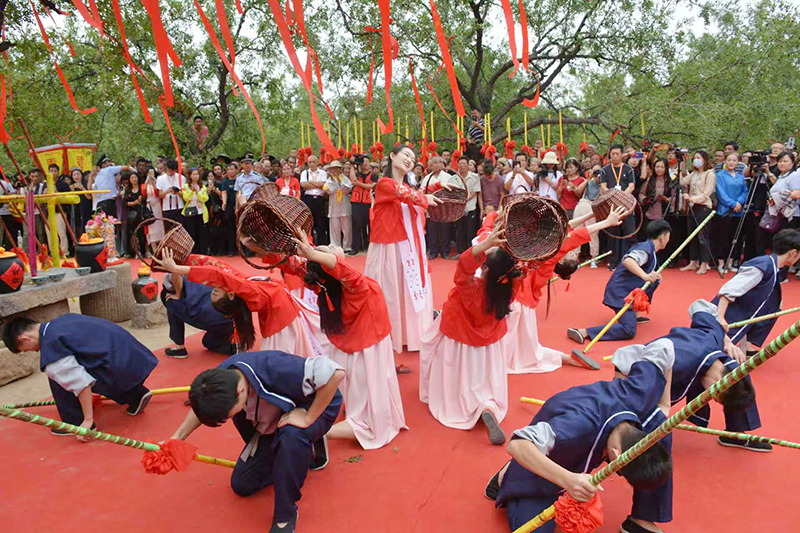
SATV, Jishan, Shanxi, September 29 — In the golden September, the National Banzao Jujube Park in Jishan County, Shanxi, is ablaze with red clouds. Jujube farmers, holding long bamboo poles, strike precisely at the branches laden with banzao jujubes, and the ripe Jishan banzao jujubes come cascading down, carpeting the clearings in the grove—this is the millennium-old "jujube beating" folk custom, and also the iconic scene of the Jishan banzao jujube harvest season.
Poles Rise, Jujubes Fall: Farming Wisdom in a Millennia-Old Folk Custom
In Taoliang Village, Jishan County, villager Li Yinguang raises her pole upward. With one strike, jujubes come clattering down all over the ground, the pole rises and the jujubes fall, a red rain scattering everywhere. Her family's 7 mu of jujube trees produce more than 10,000 jin a year, with an annual income of nearly 100,000 yuan. "The jujube-beating craft handed down from our ancestors is thousands of years old," Li Yinguang said with a smile.
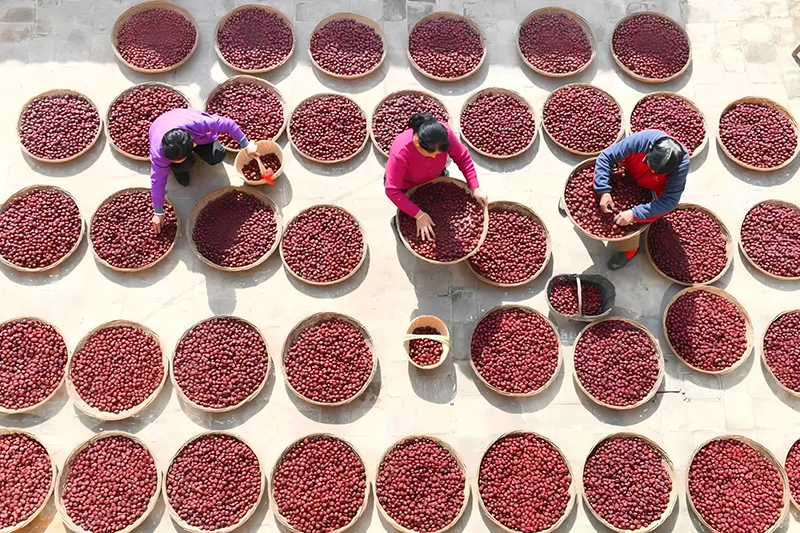
"Beating jujubes with bamboo poles looks simple, but in fact it conceals the production rule that 'if the jujube tree is not beaten, it will not bear fruit the next year.'" A staff member of the Development Center of the National Banzao Jujube Park in Jishan County explained that moderate striking of the branches can damage the phloem, allowing more nutrients from photosynthesis to accumulate in the fruit and ensuring the next year's yield and quality. This harvesting method, passed down for thousands of years, neither damages the fruit trees nor fails to promote fuller fruit the following year. It is a vivid embodiment of the harmonious coexistence of humanity and nature in agricultural civilization.
A Millennia-Old Agricultural Heritage: A Global Calling Card of Chinese Agricultural Civilization
Jishan is the hometown of Houji and the hometown of banzao jujubes. In 2023, a large number of carbonized seeds from the Xia period, including millet, broomcorn millet, rice, and soybeans, as well as stone shovels and bone shovels, were unearthed at the Dongqu site in Jishan, Shanxi. They are regarded by the archaeological community as material evidence supporting the tradition that "Houji taught the people to sow and reap in Jishan."
As the hometown of Houji and the world's only place of origin for banzao jujubes, Jishan has more than four thousand years of jujube cultivation history and is one of the earliest birthplaces of jujube trees in China.
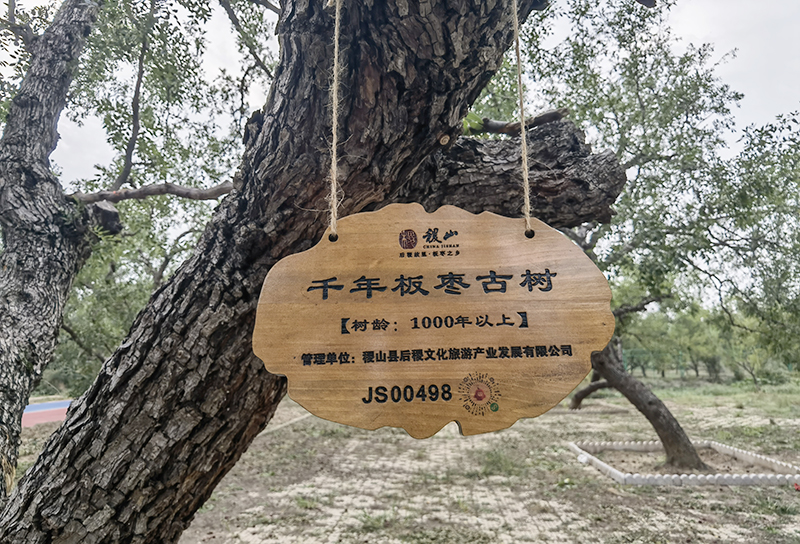
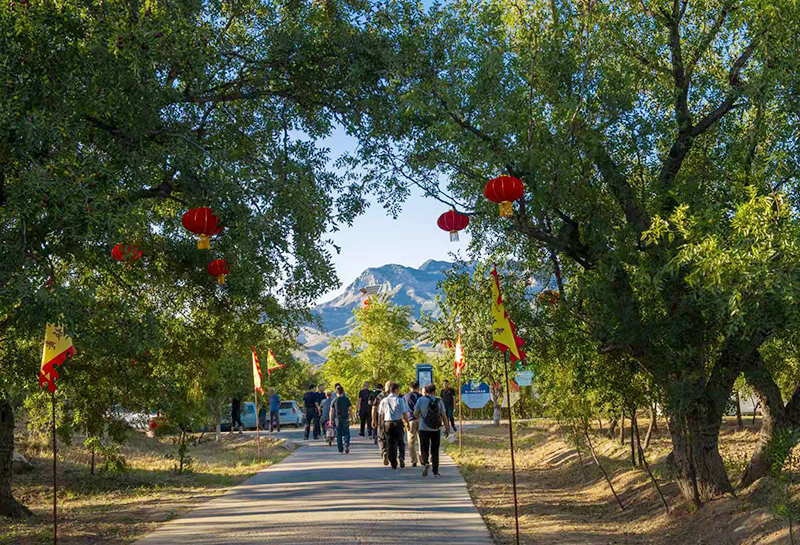
The Jishan National Banzao Jujube Park has a planned total area of about 15,850 mu, with a banzao jujube forest coverage rate as high as 92.23%. The park preserves more than 17,500 ancient jujube trees over a thousand years old and about 50,000 jujube trees around 500 years old. With the largest number, highest density, and most completely preserved ancient jujube community, it set a Guinness World Record and is known as the country's only "ten-thousand-tree, millennium-old" rare banzao jujube grove.
Jishan banzao jujubes originated in the period of Yao, Shun, and Yu. After Emperor Wen of Wei, Cao Pi, of the Three Kingdoms period designated them as "imperial jujubes," they remained royal tribute jujubes through the Tang, Song, Yuan, Ming, and Qing dynasties. In 2017, the traditional production method of Jishan banzao jujubes was included in China's Important Agricultural Heritage Systems; in 2019, it was included in the nomination list for Globally Important Agricultural Heritage Systems.
Quality Going Global: From "State Banquet Food" to "International Premium Product"
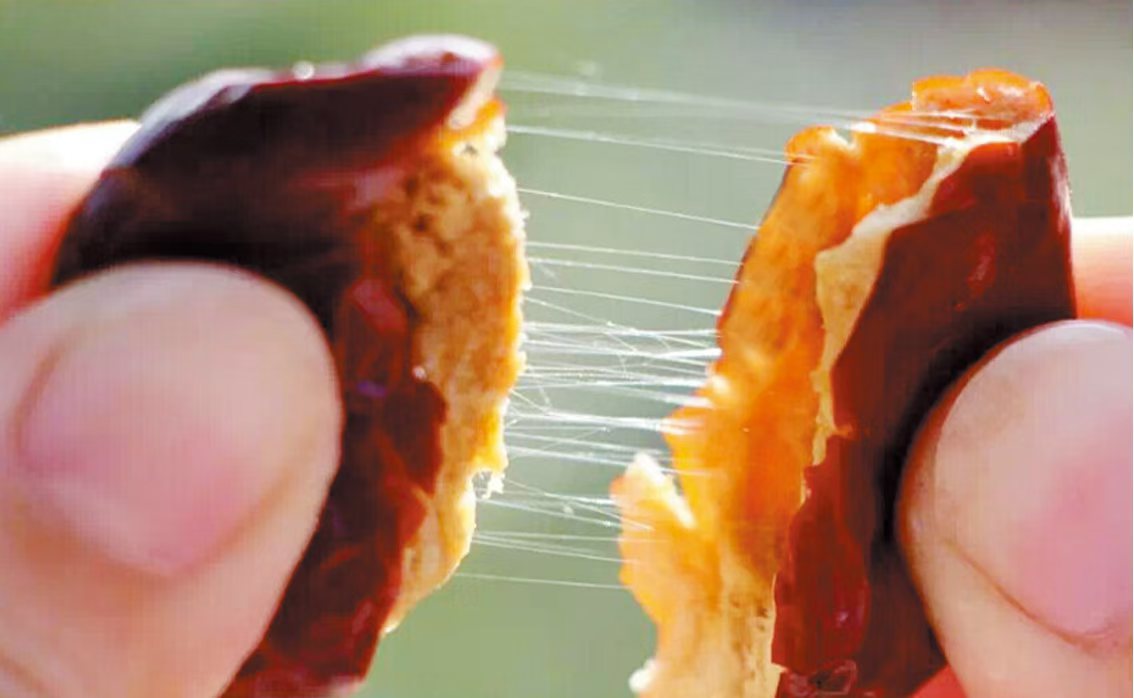
Jishan is located in the hinterland of the Loess Plateau, with abundant sunshine, large temperature differences between day and night, and unique neutral to slightly alkaline soil, providing irreplicable natural conditions for the growth of banzao jujubes, sugar accumulation, and nutrient enrichment. Jishan banzao jujubes are famous nationwide for their thin skin, thick flesh, small pits, long sugar threads, and sweet taste. Authoritative testing shows they contain 12 unique active substances not found in ordinary red jujubes, and they are hailed as "the king of Chinese jujubes."
During the Chongzhen period of the Ming Dynasty, Xue Yiyin, the magistrate of Jishan County, saw continuous jujube groves and abundant fruit in the areas of Taoliang and Yaocun. Jujube farmers told him that "selling a few dozen jin of dried jujubes is enough to pay the full year's tax silver." He improvised a poem, "Ten Thousand Trees in Autumn Glow": "At the time when Jiangnan's oranges are green, the jujubes in the northern frontier turn red... Everywhere red pearls fill the scene, urging rent collection for half a year." This poem truly records the livelihood value of banzao jujubes as the local people's "iron crops"—so it was four hundred years ago, and so it remains today.
With their exceptional quality, Jishan banzao jujubes long ago went abroad. In 1957, they entered the international market; in 1973, they were exported to Japan, North America, and Southeast Asia; in 1958, they were selected as state banquet food and repeatedly won first place at national red jujube tasting events and gold awards at national-level food expositions; they have successively been rated "first among China's top ten famous jujubes" and helped the county rank among the "top ten counties in the national red jujube industry"; in 2024, the regional public brand value reached 10.135 billion yuan, and the annual output value of the entire industrial chain exceeded 1 billion yuan.
In recent years, Jishan has promoted the value iteration of banzao jujubes from "sold by the jin" to "sold by the piece," developing more than 20 kinds of deeply processed products such as jujube tea, jujube vinegar, jujube coffee, and jujube peptide beverages, achieving an upgrade from "agricultural product" to "agricultural technology product" and then to "agricultural art product." At the same time, it has launched cultural and creative IPs such as "Zao Jiujiu," created regional public brands such as "Jian Ji" and "Ji Yu," and built a digital marketing system covering agricultural specialty products and intangible cultural heritage cultural and creative products throughout the county.
Riding the Momentum to Go Global: Building a New Trade Channel to the South Asian Market
"Jishan banzao jujubes are an extremely scarce, national-treasure-level agricultural cultural heritage resource, with a millennium of cultural lineage, a ten-billion-yuan brand, top quality, and a unique ancient tree community. There is still considerable room to increase their overseas market share." Qin Zhaohui, general manager of Shanxi Huatai Fengji Development Co., Ltd., said the enterprise will base itself on local advantages while looking to the international market, promote Jishan banzao jujubes beyond Shanxi and toward the world, empower rural revitalization through industrial going-global, and drive more jujube farmers to steadily increase their incomes.
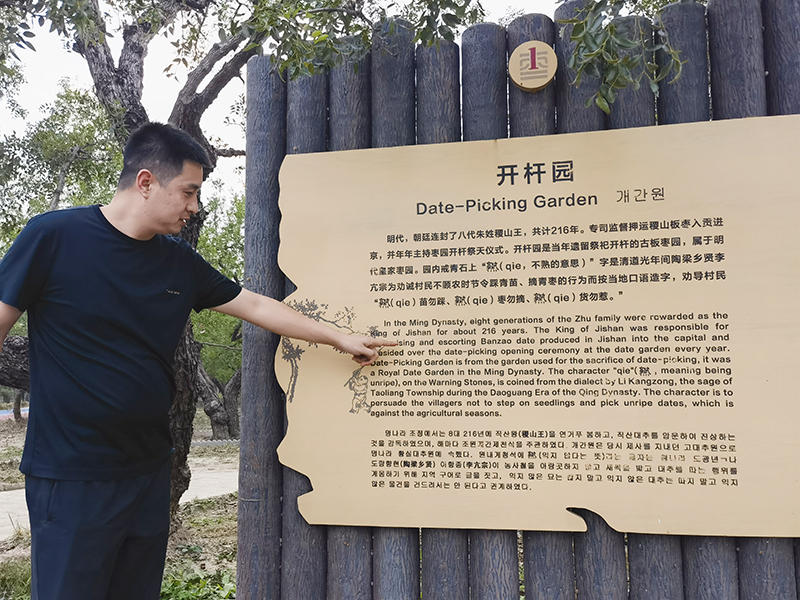
Zhao Wenhua, business representative of the Nepal South Asia Network TV Media Group, said after visiting the National Banzao Jujube Park that the group will rely on its South Asian communication matrix and cross-border resources, take multilingual communication, brand promotion, and buyer matchmaking as key measures, tell the story of banzao jujubes well, open up new South Asian trade channels, amplify the industrial advantages of "Chinese agricultural heritage, global agricultural heritage candidate," and help agricultural heritage products set sail for overseas markets.
Culture as the Medium: Letting the World See the "Jishan Path"
Jishan National Banzao Jujube Park has long been a window for external exchange: in 2016, the Sri Lankan ambassador to China led a delegation of Buddhist monks to visit the jujube garden, and a "China-Sri Lanka Friendship Banzao Jujube Garden" was established; in 2017, ambassadors and envoys from ten countries including Japan and Germany visited by reputation, leaving behind a "Ten-Country Ambassadors Memorial Garden"; in 2019, Jishan banzao jujubes were included in the buffet menu of the Ministry of Foreign Affairs' global promotion event, becoming an important diplomatic carrier for showcasing Chinese agricultural civilization; in 2025, the ancient jujube systems of the Yellow River Basin jointly applied for Globally Important Agricultural Heritage Systems, with Jishan, as a core participant, promoting Chinese ancient jujube culture onto the world stage. In August 2026, a transnational wedding was held in the millennium-old jujube grove, with more than 20 overseas relatives and friends from the United Kingdom, the United States, France, India, Canada, and other countries gathering together to immersively experience the Eastern marriage custom of "taking the jujube as the medium, with jujubes bringing noble offspring."
In terms of "going out," Jishan has held five consecutive Houji Forums, inviting domestic and foreign experts and scholars to trace the origins of agricultural civilization together; through the "Jishan Banzao Jujubes China Tour" series of promotional activities, relying on livestream e-commerce and new media matrices, it has conveyed the story of millennium-old banzao jujubes to netizens around the world. During the 2025 "Jujube Fragrance Spreads Across the Country" agricultural assistance livestream event, hosts traveled through the jujube groves and tasted the jujubes on site, letting good quality and good stories spread throughout the country.
From the Ming Dynasty portrayal of people's livelihood with "everywhere red pearls fill the scene" to today's cross-border story of "jujubes" reaching you across the seas, Jishan banzao jujubes have always been the most vivid cultural symbol of this land—witnessing the endless vitality of agricultural civilization and carrying the pace of the times in rural revitalization. This deep cooperation between a local enterprise and an international media platform is a key leap for Jishan's specialty agriculture from a "regional brand" toward an "international brand." The millennium-old Jishan banzao jujubes will cross mountains and seas and spread their fragrance to the world.