





SATV, Kathmandu, December 19 — On December 18, coinciding with the historic 70th anniversary of diplomatic relations between China and Nepal, the Fourth China-Nepal Media Summit and Symposium on the “Trans-Himalayan Media Coordination Alliance for Public Benefit” was successfully held in Kathmandu, Nepal. The event was held under the theme “Seven Decades Hand in Hand, Media Shaping the Future – A New Chapter in China–Nepal Media Cooperation.” The summit brought together representatives from government, media, education, business, and overseas Chinese communities of both countries to review achievements in friendly exchanges and chart a new blueprint for media cooperation and regional collaborative development.
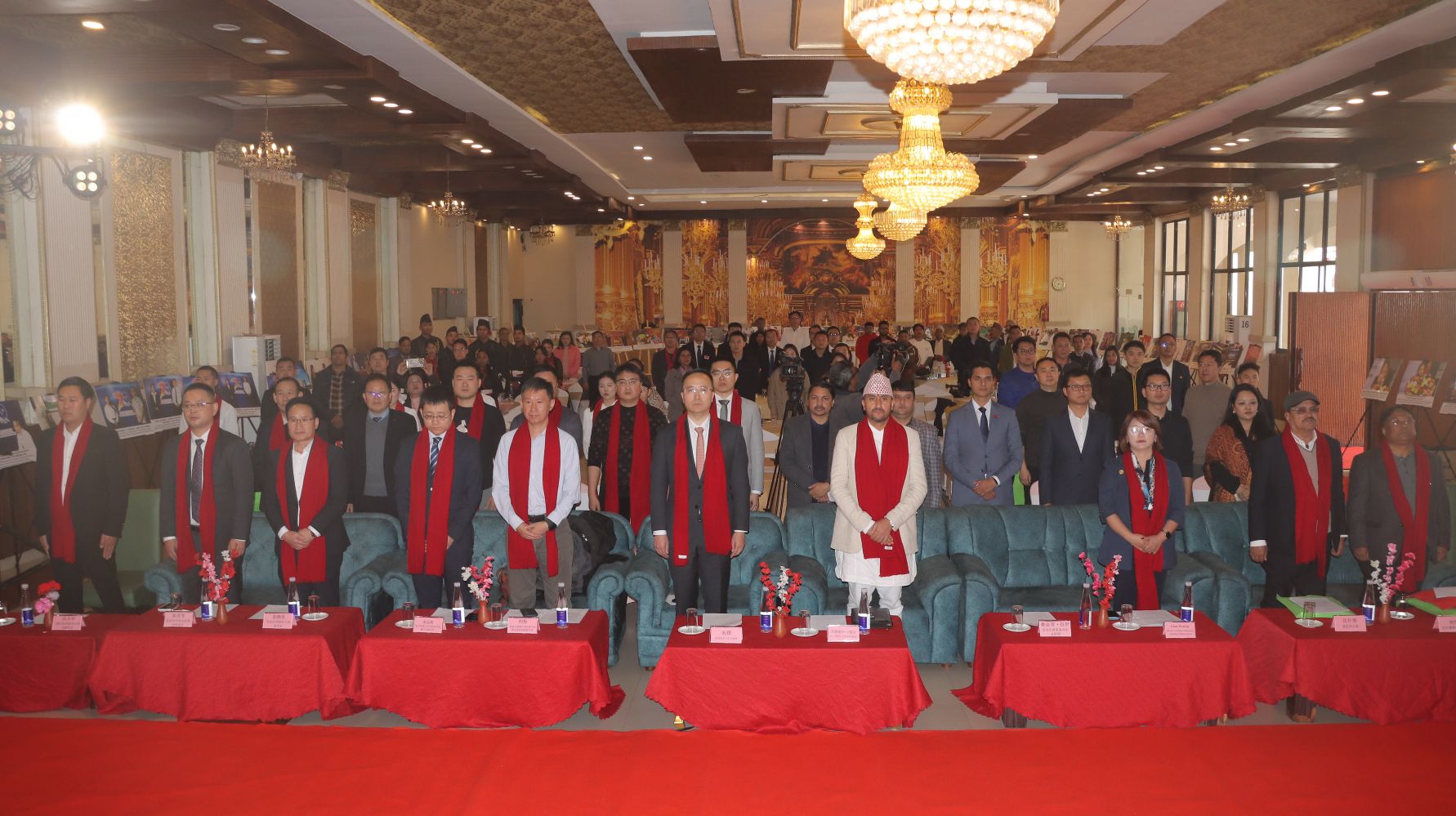
Organized with the support of the Chinese Embassy in Nepal, the summit was hosted by the South Asia Network TV Platform of the *Potala* Magazine. Distinguished guests included Minister of Communications and Information Technology of Nepal, Mr. Jagdish Kharel; Counselor Zhu Feng from the Chinese Embassy in Nepal; former Nepalese Ambassador to China Bishnu Pukar Shrestha; Vice President of the World Press Council and Chairman of the Nepal-China Media Forum Kishor Shrestha, among others.
In their addresses, attendees unanimously affirmed the pivotal bridging role of media in bilateral relations and regional development and clarified future cooperation directions.

Minister of Communications and Information Technology of Nepal, Mr. Jagdish Kharel, stated that Nepal and China have long been friendly neighbors. At the summit, Minister Kharel reiterated Nepal’s adherence to the One-China principle and its opposition to the use of its territory for anti-China activities. He remarked that China has made significant contributions to Nepal’s infrastructure development and has also aided Nepal’s progress in economic development, education, healthcare, tourism, culture, and cultural heritage preservation, extending gratitude to the Chinese government and people.

Counselor Zhu Feng noted that over the past 70 years of diplomatic ties, China and Nepal have deepened political mutual trust and achieved fruitful economic, trade, and cultural exchanges. He expressed hope that both sides would leverage this summit and related collaborations to deepen content co-creation and talent exchanges, transforming communication strengths into drivers for regional sustainable development and the improvement of people’s livelihoods.

Ms. Ramila Gautam, CEO of South Asia Network TV, introduced that the summit proposed establishing the “Himalayan Regional Media Public Welfare Collaboration Alliance,” aiming to encourage regional media to go beyond traditional reporting and engage in practical cooperation in areas such as cultural preservation and ecological public welfare.

Mr. Jin Xiaodong, President of the Nepal Overseas Chinese Association, suggested that media should focus more on stories of ordinary people, allowing vivid personal experiences to enrich regional narratives and enhance the international discourse power of Chinese, Nepalese, and regional media.

Mr. Xiang Shaohua, Vice President of the Overseas Chinese Association of Pokhara, Nepal, emphasized using the summit as an opportunity to uphold the concept of openness and mutual benefit, using lenses to document cooperative achievements, words to convey public aspirations, and public welfare to unite development efforts, allowing the snow-capped Himalayas to witness the enduring brilliance of China-Nepal friendship, empowered by media.

Mr. Kishor Shrestha, Vice President of the World Press Council and Chairman of the Nepal-China Media Forum, expressed that it was a profound honor to address the Fourth China-Nepal Media Summit at this significant moment, coinciding with the 70th anniversary of diplomatic relations between Nepal and the People’s Republic of China. He stated that the summit’s theme, “Seven Decades Hand in Hand, Media Shaping the Future – A New Chapter in China–Nepal Media Cooperation,” is not merely a slogan but a reminder of responsibility. He emphasized that the Himalayas have served as corridors connecting civilizations since ancient times, and contemporary media is now inheriting this bridging mission. Facing the new era’s demands for regional development, media has the responsibility to move beyond traditional reporting, safeguarding cultural memory, transmitting knowledge values, and serving the public interest with professionalism..
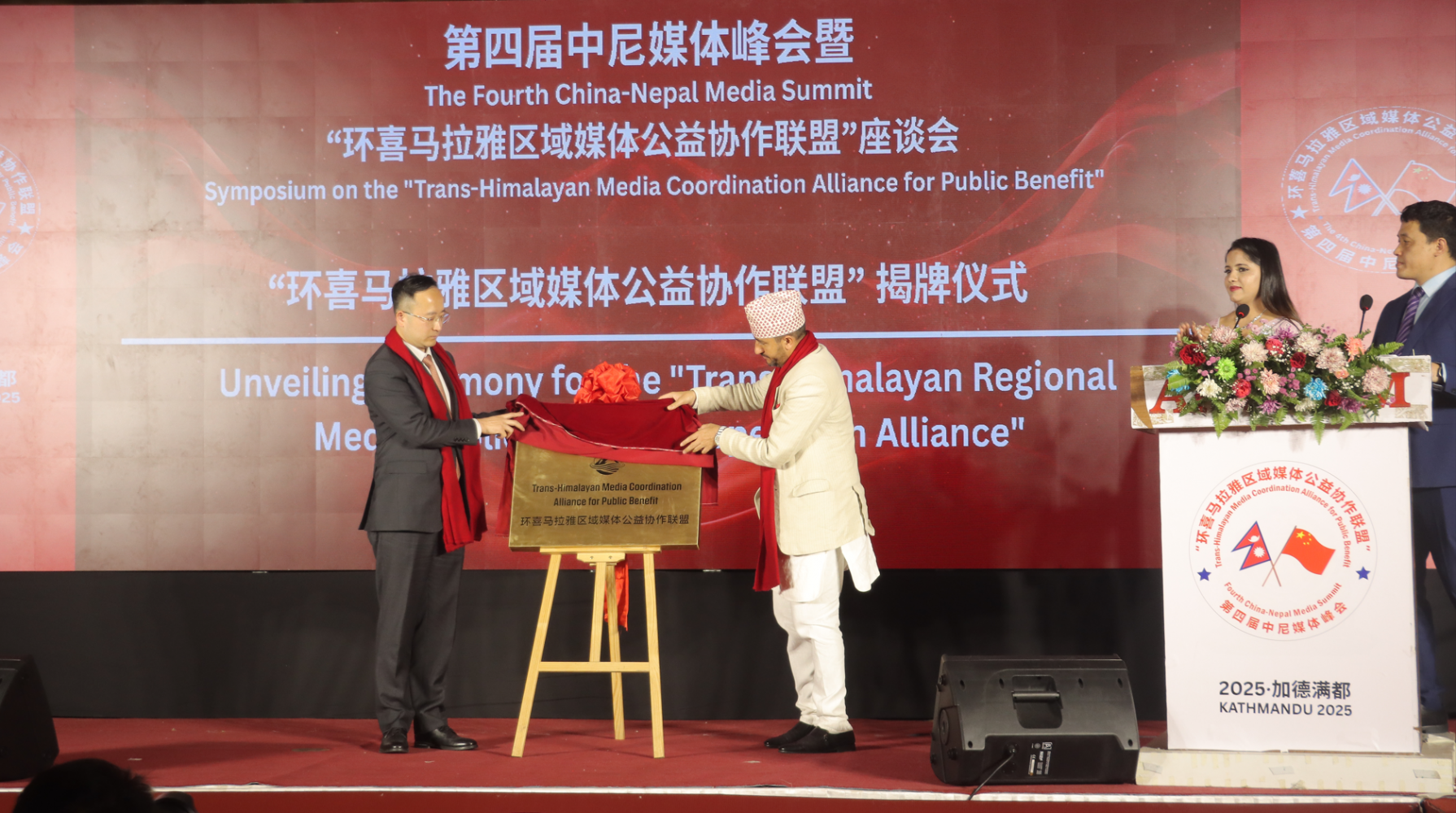
The summit yielded several practical outcomes, marking the entry of China-Nepal cooperation in related fields into a new stage of institutionalization and project-based implementation. Key achievements included the official inauguration of the “Trans-Himalayan Media Coordination Alliance for Public Benefit,” accompanied by the release of its founding declaration and organizational structure by Minister of Communications and Information Technology of Nepal, Mr. Jagdish Kharel, and Counselor Zhu Feng from the Chinese Embassy in Nepal, as well as the launch of the “Himalayan Cultural Heritage Digital Preservation Project” and the “Media for Agriculture Public Welfare Initiative.” The Ceyuan Innovation (China-Nepal) Future Industry Offshore Innovation Center was inaugurated, and the *Action Plan for Building a China–Nepal Future Industry Collaborative Innovation System* was released, aiming to promote bilateral sci-tech achievement transformation and industrial chain collaboration through an offshore innovation platform. Additionally, the summit released the special report *Social Responsibility and Practical Pathways of Media in Ecological Conservation in the Himalayan Region*, clarifying key roles of media in risk communication and public mobilization for regional ecological protection.

The summit atmosphere was warm and friendly. A poetry recital, titled “Seventy Years Together, Journeying Through Mountains and Seas”—a tribute to the 70th anniversary of the establishment of diplomatic relations between China and Nepal—was presented. Students from Khwopa Secondary School, a teaching point of the Confucius Institute at Kathmandu University, performed “Jasmine Flower” and “Tarani Janani,” a fusion of a Chinese song and a Newari song using Nepal’s traditional instruments, showcasing the vitality of cultural exchange. South Asia Network TV presented its series of reports on the 70th anniversary of China-Nepal diplomatic relations, announced the premiere of the Nepali-dubbed version of the Chinese TV series *Minning Town* (which depicts poverty alleviation), and launched the 30-episode micro-drama project *China–Nepal: One Family*. Attendees also visited a photo exhibition on China-Nepal friendly achievements, organized by South Asia Network TV.

The successful hosting of this summit systematically showcased the latest achievements of Chinese and Nepalese media in innovative communication and public welfare practices. By launching multiple cooperation mechanisms and projects, it provided a new framework and pathway for deepening media cooperation across the Himalayan region and fostering people-to-people bonds, opening a new chapter in China-Nepal media collaboration and regional synergistic development.