




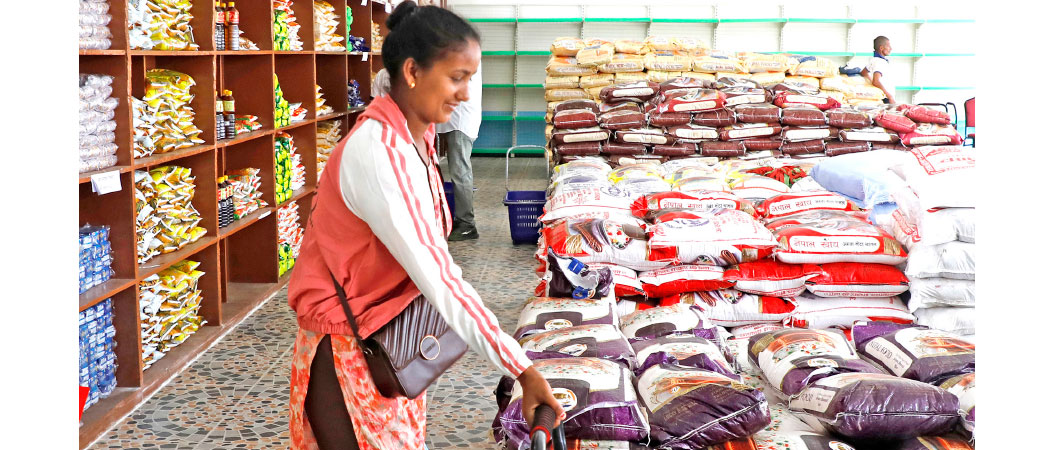
SATV, Kathmandu, Feb. 6: Prices of essential daily commodities, particularly cooking oil and rice, have risen sharply in recent weeks, directly affecting household kitchens across Nepal.
According to the Nepal Retailer Association, the price of cooking oil has increased by Rs. 40 to Rs. 50 per litre over the past two weeks, while rice prices have gone up by Rs. 10 to Rs. 15 per kilogram, depending on quality.
General Secretary of the Nepal Retailer Association, Amul Kaji Tuladhar, said that cooking oil, which was sold at Rs. 230–240 per litre just a short time ago, is now being sold at around Rs. 280 per litre.
Similarly, rice prices have also seen noticeable hikes, although prices of other food items such as beaten rice and lentils have fluctuated slightly.
Tuladhar said that rice prices had temporarily declined when newly harvested rice entered the market, but the trend has reversed again.
He emphasised that retailers are not responsible for the price hike, arguing that the main drivers are producers and importers.
“Retailers are merely intermediaries,” Tuladhar said. “Producers send goods with new price lists and higher Maximum Retail Prices (MRP) printed on the packages. We are not allowed to charge even one rupee more than the printed MRP, and we don’t.”
He said that if retailers still have old stock, it is sold at the previous price. However, once new stock arrives at higher prices, retailers are compelled to sell accordingly.
“Price hikes do not create at the retail level; they occur higher up the supply chain,” he said.
Tuladhar identified three major reasons behind the recent price hikes of essential goods: an increase in the value of the dollar in the international market, rising prices of raw materials, and large donations demanded by political parties from industrialists during elections.
According to him, these factors may have contributed to the current price hikes in the market. He also noted that in the past, prices of essential goods in Nepal often increased during election periods.
He said that when prices increase in the market, retailers have to face direct criticism and questions from consumers.
"All parties complain along with us. But those who actually increase prices are behind the scenes. We are just middleman between consumers and producers," said General Secretary Tuladhar.
Retail traders have also expressed dissatisfaction with the approach of the Department of Commerce, Supplies and Consumer Protection and other regulatory bodies, accusing them of focusing inspections only on retail shops instead of investigating price hikes at the upper levels of the supply chain.
He said that sudden price hikes of essential goods such as rice and cooking oil have affected consumers and created stress in managing household budgets.
Meanwhile, the Department of Commerce, Supplies and Consumer Protection has expressed serious concern over widespread complaints from consumers and the media regarding abnormal price hikes and supply shortages of daily commodities such as oil, cooking gas, and rice.
Issuing a press statement on Wednesday, the Department directed concerned authorities to maintain a competitive and transparent market system by controlling unnecessary price increases.
“The major producers, importers, and distributors of food and oil have been called and instructed to provide their goods or services without taking unfair profits and to provide relief to consumers by adjusting the unnatural price hikes,” the statement read.
The Department said that, in accordance with the Consumer Protection Act, 2075 and the Consumer Protection Regulations, 2076, it remains committed to safeguarding consumers’ rights to access quality goods and services.
As part of efforts to control unreasonable price increases and maintain market discipline, major food grain and edible oil producers, importers, and distributors have been summoned and instructed to supply goods without charging undue profits.
The Department said that legal action, including fines and penalties, has already been taken against several firms found violating existing laws.
It warned that any activities found to be against prevailing laws will face strict legal action.