




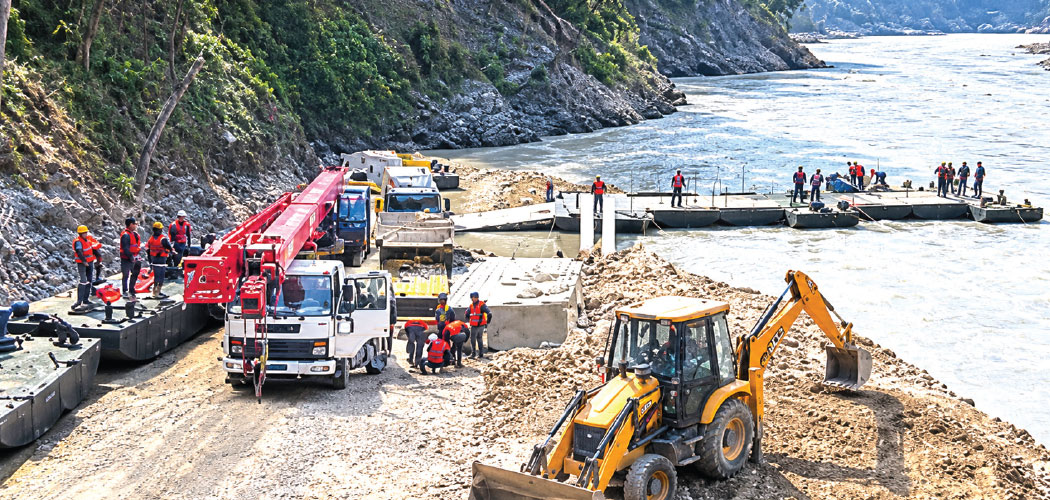
Satv, Kathmandu, Nov. 27: For the first time in Dhading, a floating pontoon bridge is being installed over the Trishuli River to restore road connectivity disrupted by Bhotekoshi flash floods. Unlike conventional bridges, the structure floats on water and allows vehicles to cross the river through interconnected floating platforms.
The temporary bridge is expected to provide relief to residents of eight local levels in Dhading and parts of neighbouring Gorkha, which have remained disconnected from the Prithvi Highway since floods swept away the concrete bridge over Phurkekhola on August 26.
The flood, which entered the Trishuli River through the Bhotekoshi, disrupted transportation and forced residents to use longer and difficult alternative routes to reach the highway.
The pontoon bridge is intended to operate during the dry winter months until mid-April. It will be dismantled in the first week of Baisakh before the onset of monsoon.
The 145-metre-long bridge consists of 33 floating units brought from Kothiyaghat in Bardiya. It was operated along the Geruwa bank of the Karnali River from 1997 to 2012/13 but remained unused after a permanent bridge was constructed there, Yamanath Danai, chairman of Jwalamukhi Rural Municipality, told The Rising Nepal.
Purchased from China, the bridge was identified as an alternative after the Phurkekhola bridge was destroyed. Initially, local authorities had also considered operating a ferry service across the river, he said. After Dashain, representatives of local governments and journalists visited Bardiya to inspect the structure and decided to bring it to Dhading, Danai informed.
The initiative was taken with cooperation from all 13 local levels in Dhading. Following the completion of administrative and legal procedures, the Rajapur Irrigation Management Project handed over the bridge to the District Administration Office, Dhading, he said.
The floating units are currently being repaired, painted and connected near Jaladevi Temple, close to Phurkekhola. A 12-member technical team from the Rajapur Irrigation Management Office is overseeing the installation.
According to technical expert Shashidhar Wagle, the units are connected using chains and windlasses and secured with anchors. Cranes are also being used because of the strong river current. Installation began on November 22, and authorities aim to bring the bridge into operation from November 28, subject to weather conditions and the availability of equipment. Access roads on both sides are nearing completion, he informed.
Although the bridge has a capacity of bearing 20 tonnes load, its full capacity will not be used initially because some structural components have weakened after years of disuse. Heavy carrier vehicles will not be allowed to cross, while buses, ambulances and smaller vehicles will be permitted with safety precautions.
Passengers will have to get off before buses cross, with only the driver remaining inside. Vehicles will also be required to maintain controlled speeds and carry limited loads. The bridge is expected to reduce traffic pressure on the existing Mastar-Parewatar earthen road, which has been carrying excessive traffic since the flood.
Residents currently have to travel more than 18 kilometres along difficult roads to reach the nearest alternative route to the Prithvi Highway.
According to Adhikari, the disruption has affected daily life and the transportation of essential commodities, while rising transportation costs have pushed up market prices.
Danai said all 13 local levels had agreed to share the expenses of transporting, installing and managing the bridge. However, local representatives stress that it will provide only temporary relief. They have urged the government to upgrade alternative roads and expedite the construction of a permanent motorable bridge within the next six to seven months.