




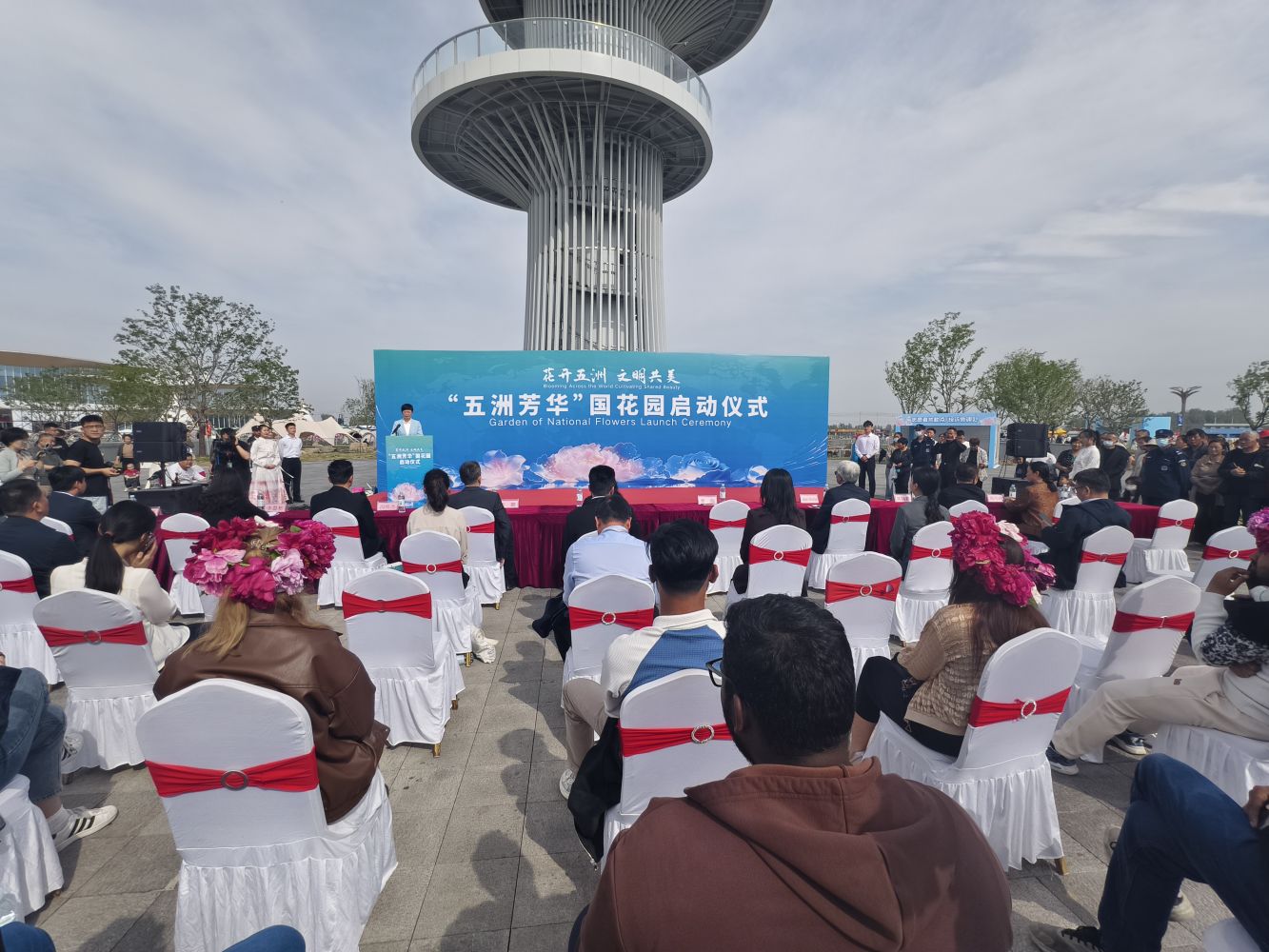
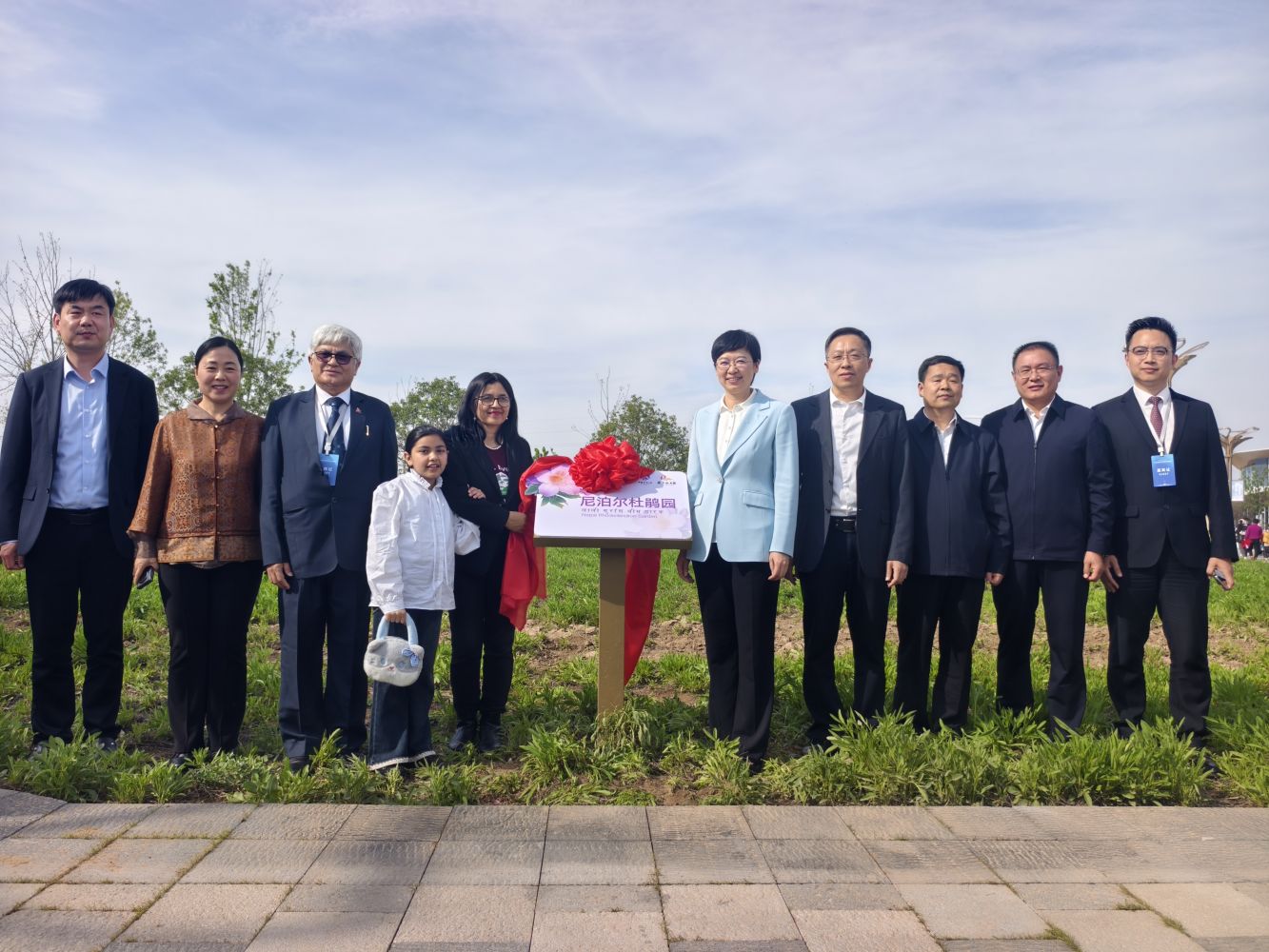
SATV, Kathmandu, April. 12 - On the afternoon of April 11, the launching ceremony of the “Universal Blossoms” National Flower Garden Project was held at Guanyu Peony Garden in Mudan District, Heze. Representatives from the Embassy of Nepal in China, Trade Promotion Center Nepal, as well as government officials of Mudan District and Heze and heads of relevant departments gathered to witness the launch and jointly unveil the “Nepal Rhododendron Garden”. Taking flowers as a bond, the event deepened cultural exchanges between China and Nepal and boosted the international development of the city brand of “China's Peony Capital”.
Cao Lin, member of the Standing Committee of the CPC Heze Municipal Committee and director of the Publicity Department, attended the ceremony and delivered a speech. With a peony cultivation history of more than 1,500 years, Heze is the world’s largest core area for the peony industry with the most complete industrial chain. In recent years, the city has continuously promoted “peonies going global” and built bridges for international cultural exchanges. The launch of the “Universal Blossoms” National Flower Garden is an important step for Heze to build a “fragrant reception hall” for mutual learning among world civilizations. The “Nepal Rhododendron Garden” and “Bulgarian Rose Garden”, to be built as key projects in the first phase, will serve as important platforms for deepening friendship between China and other countries.
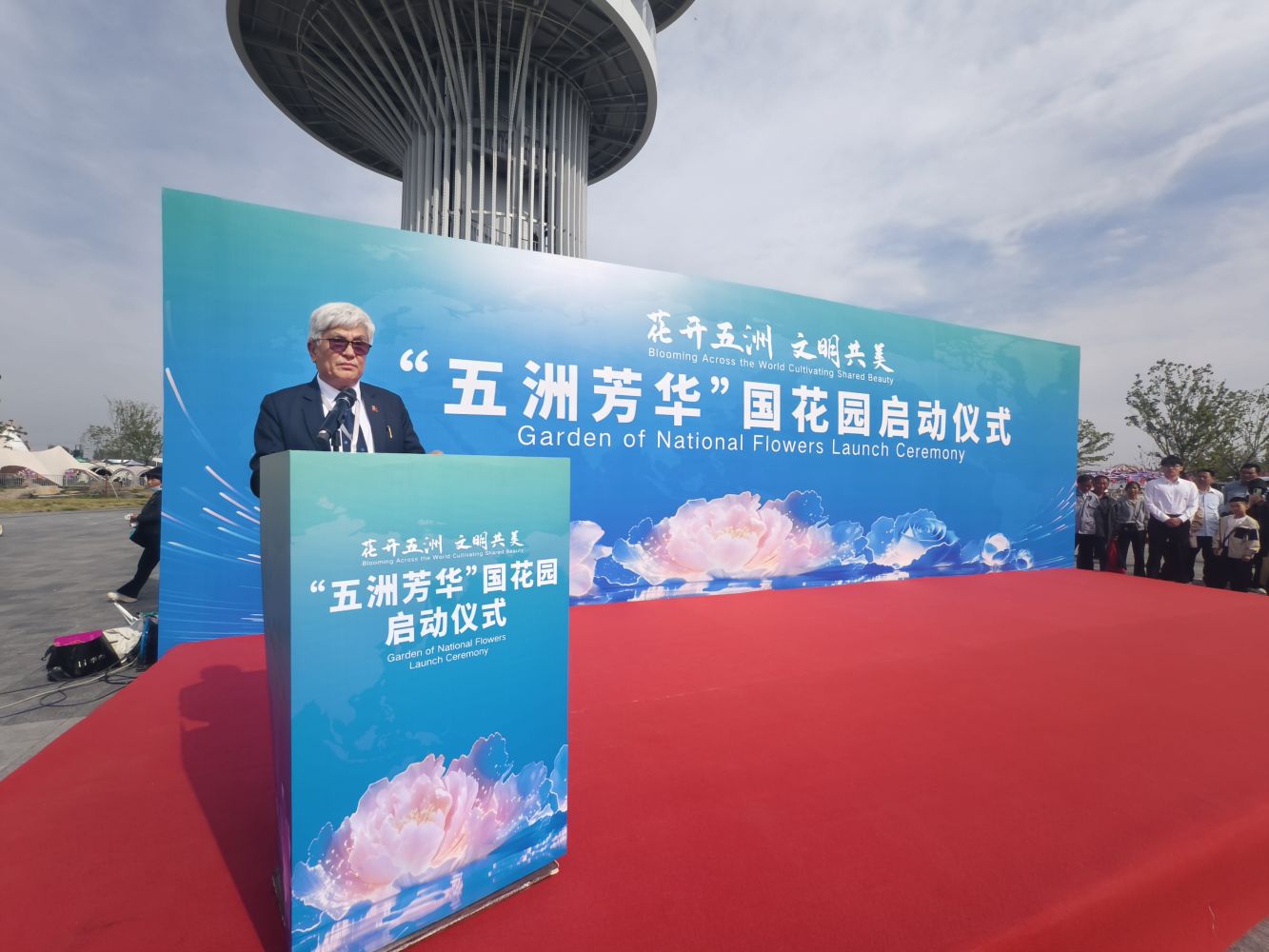
Subash Shrestha, former deputy mayor of Dhulikhel Municipality of Nepal and chairman of the Nepal Trade Promotion Center, addressed the ceremony and spoke highly of the “Universal Blossoms” National Flower Garden Project. He expressed hope that the cooperation would serve as an opportunity to deepen mutual learning in floral culture and practical cooperation between Nepal and China.
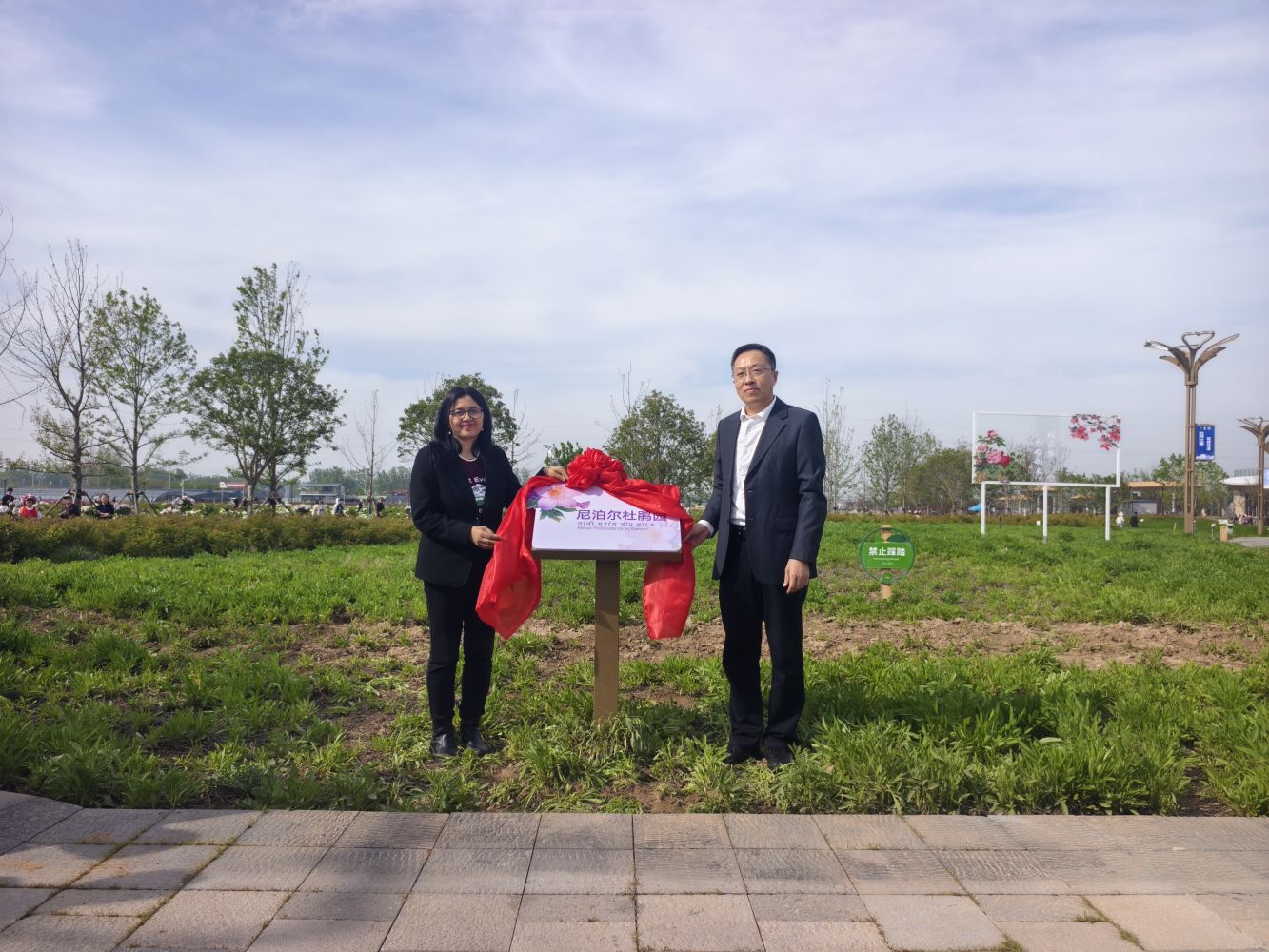
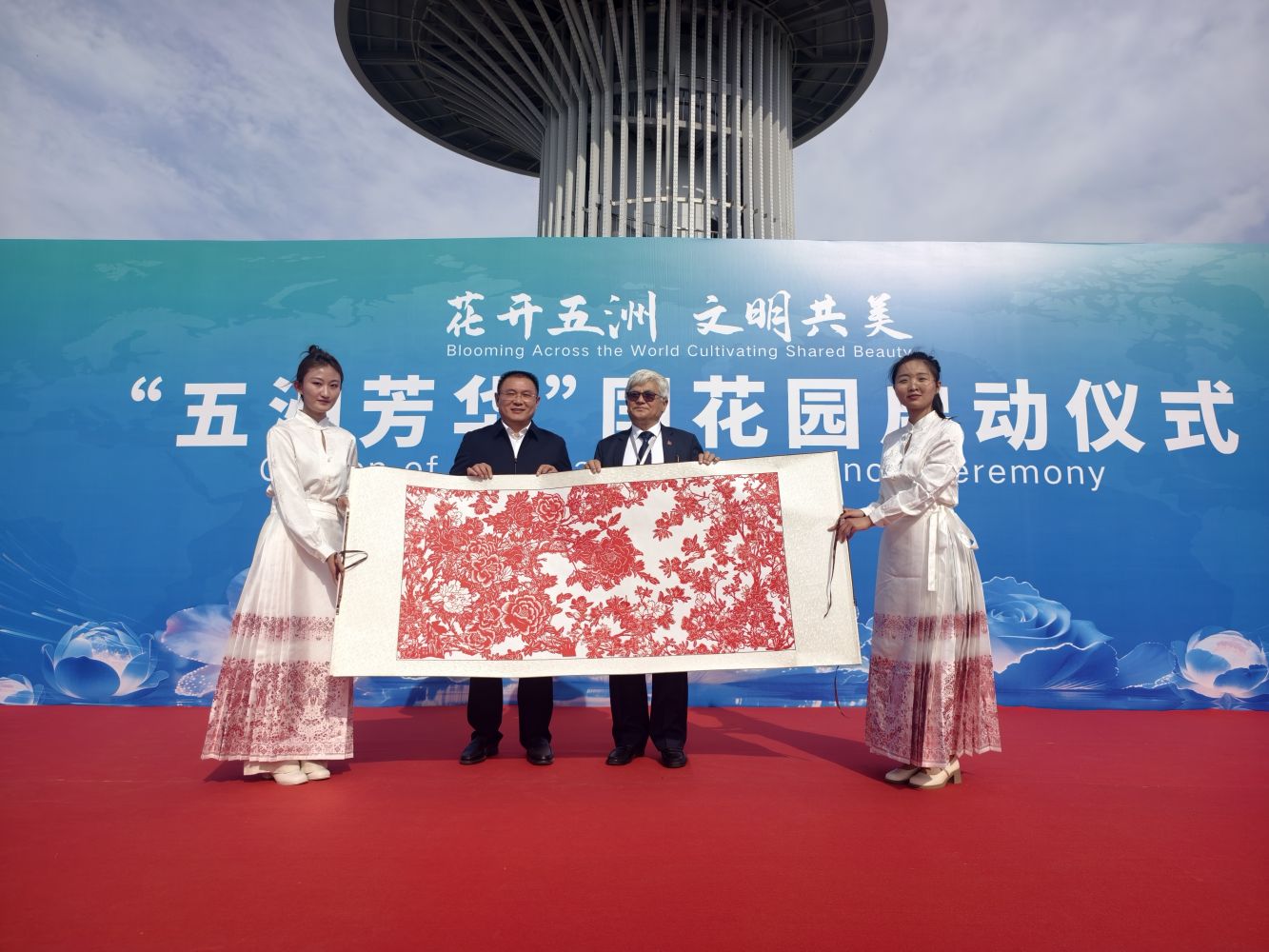
At the event, Zhang Peng, vice mayor of Heze Municipal People’s Government, and Parbati Aryal, economic minister at the Embassy of Nepal in China, jointly unveiled the plaque for the “Nepal Rhododendron Garden”. Chen Juxiang, deputy secretary of the CPC Mudan District Committee, and Subash Shrestha exchanged gifts including paper-cut cultural and creative products themed on peonies and rhododendrons, as well as rhododendron seeds, in a vivid display of the friendship between China and Nepal. Following the ceremony, guests toured the garden to enjoy the unique charm of peonies and rhododendrons blooming side by side.
China and Nepal are connected by mountains and rivers and enjoy long-standing friendship spanning generations. Alpine rhododendron is known as “Laliguras” in Nepal, a symbol of beauty and auspiciousness. The settlement of the “Nepal Rhododendron Garden” in Heze represents a fusion of cultures and a dialogue of hearts, which will further strengthen the emotional bond between the two peoples.
As the core area of “China's Peony Capital”, Mudan District boasts 1,308 peony varieties in nine color series and ten flower forms, with a planting area of over 100,000 mu and more than 260 deep-processing products. The reputation that “Caozhou peonies are the best in the world” is well-known at home and abroad.
As the highlight of the integration of peony culture and tourism, the “Universal Blossoms” National Flower Garden will bring together national flowers from around the world to build a world-class floral park integrating sightseeing, cultural experience, international exchanges and educational tourism. It will become a new landmark of opening-up for Mudan District, enabling peony culture to develop from “a single splendid bloom” to “fragrance spreading far and wide across the globe”.