




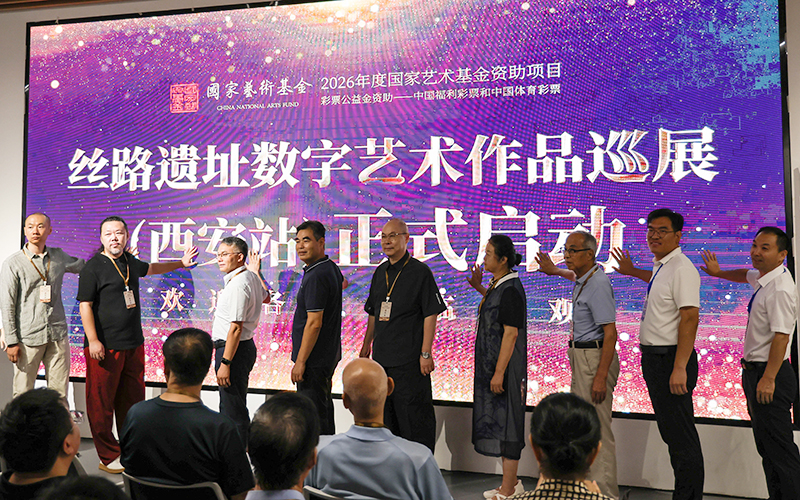
SATV, Kathmandu, Aug. 22 - The 2026 National Arts Fund-funded communication, exchange, and promotion project, the “Silk Road Heritage Digital Art Exhibition Tour,” officially opened on August 21 in Xi’an, the ancient starting point of the Silk Road
The exhibition will travel to six cities—Xi’an, Zhangye, Fuzhou, Shenzhen, Beijing, and Shenyang. Through a mobile exhibition format, it seeks to overcome geographical barriers, use digital technology to empower cultural heritage preservation and presentation, promote the creative transformation and innovative development of China’s outstanding traditional culture, and contribute to cultural exchange under the Belt and Road Initiative.
As a national public-interest platform supporting the arts, the National Arts Fund provides overarching support for the project. Led by Northeastern University, the project brings together more than ten organizations, including Xi’an Fuxing Civilization Culture & Tourism Group, the Institute of Historical and Cultural Industries at Northwest University, and the National-Local Joint Engineering Research Center for Digitalization of Cultural Heritage. Together, they have established a cross-regional collaborative system integrating academia, industry, and research.
After 15 years of dedicated research, the project team has traveled extensively along the Silk Road, systematically examined archaeological materials, and overcome dozens of technical challenges, including the restoration of ancient sites to their original scale and the dynamic reconstruction of faded murals. The team has created unified digital archives and artistic reconstructions of Silk Road heritage sites scattered across thousands of kilometers.
Project leader Liu Guangyuan said in an interview that Xi’an, as the starting point of the Silk Road, was the indispensable choice for the exhibition’s launch. The project aims to bridge the gap between academic research at universities and practical applications in the cultural and creative industries, lower the barriers for the public to engage with Silk Road heritage, and raise awareness of cultural relic preservation.
At the exhibition’s opening ceremony, the lights on the automated display platform gradually illuminated the venue, symbolically awakening a Silk Road civilization that had remained dormant for more than a thousand years. Ancient ruins in remote landscapes were brought back to life through digital art.
The exhibition features five immersive themed areas, combining a range of digital-art techniques, including animated murals, animated cultural relics, animated text, animated maps, and performance-based animation. Ancient ruins, museum collections, and historical documents have been transformed into immersive content that visitors can see, experience, and interact with. The exhibition creates a multidimensional and immersive cultural experience centered on the Silk Road, bringing heritage sites “to life” and making ancient civilization tangible to contemporary audiences.
According to the organizers, the tour moves beyond the limitations of traditional exhibitions confined to permanent museum venues. By taking the exhibition directly to different cities, the project seeks to make Silk Road culture more accessible and appealing to the general public, particularly younger audiences.
The exhibition is not merely a visual spectacle. It also seeks to create a high-quality cultural IP, incorporating interactive NPC characters and live situational performances to make historical figures and stories more vivid and engaging. These approaches are designed to attract young people to World Heritage and promote traditional culture beyond conventional audiences.
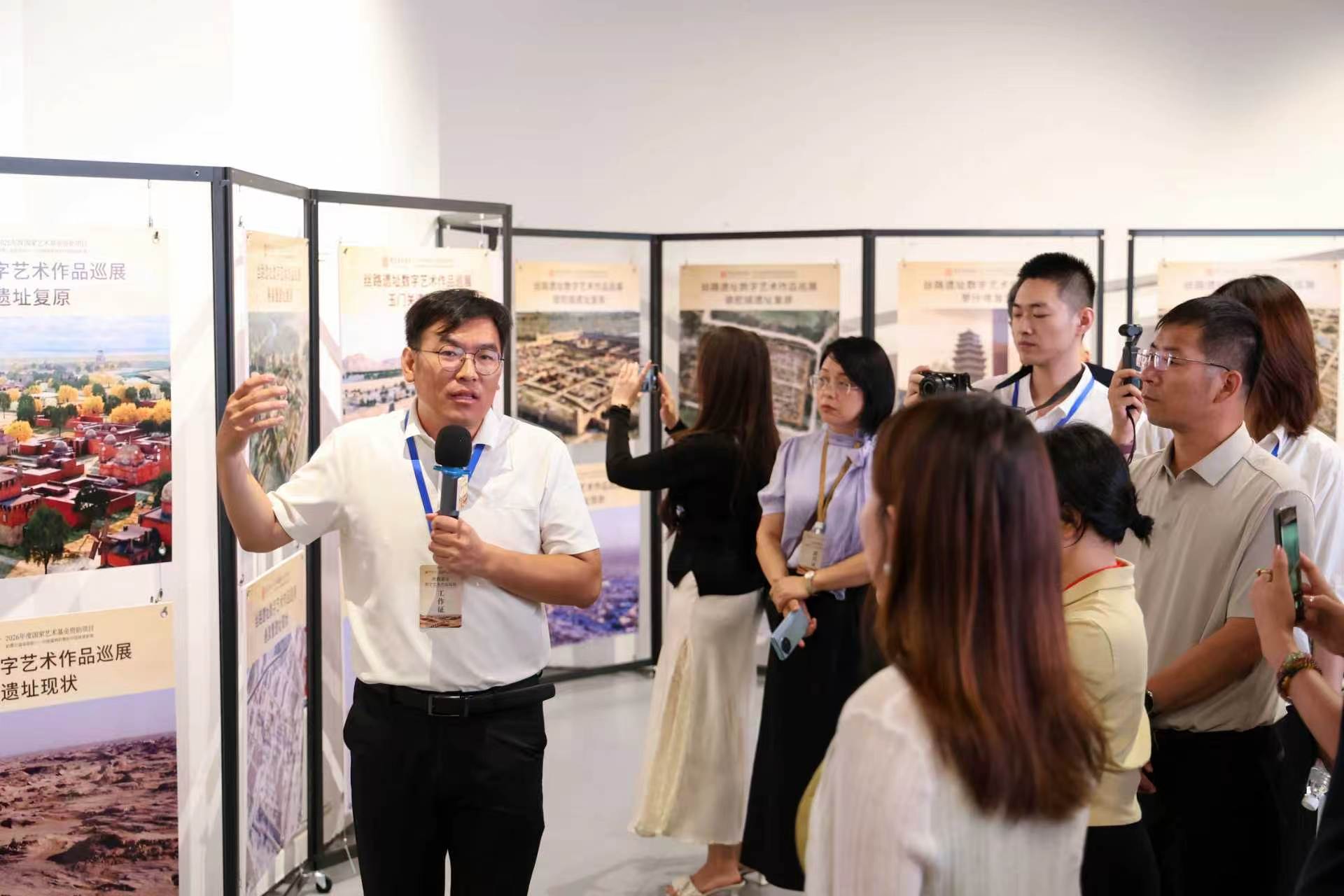
Zhang Puran said that the team has consistently adhered to two principles: “zero deviation in historical research” and “youth-oriented artistic expression.” Digital technology, he emphasized, is not simply a tool for exhibition presentation but also a means of permanently preserving cultural relics. Even if physical heritage sites deteriorate or disappear through natural processes, complete digital archives can preserve their cultural memory for future generations—truly allowing “cultural relics to live forever and civilization to endure.”
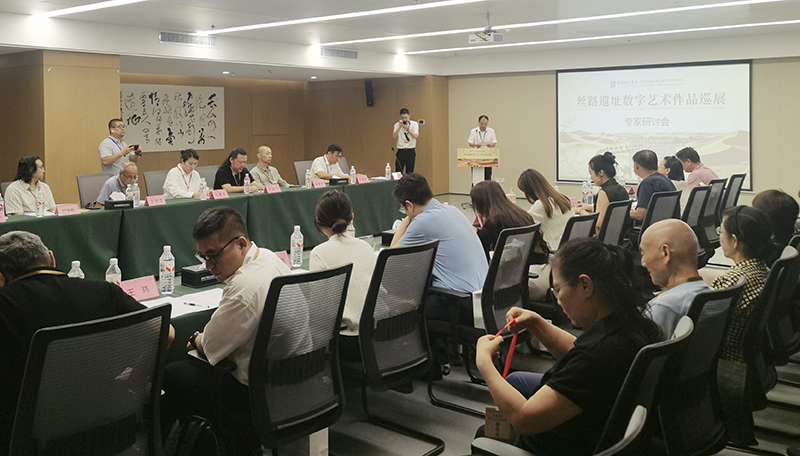
A symposium titled “Digital Preservation, Inheritance, and Innovative Development of Silk Road Cultural Heritage” was also held following the exhibition’s opening. Experts and scholars discussed topics including the digital restoration of Silk Road heritage sites, approaches to revitalizing cultural heritage, innovation in digital-art exhibition design, and contemporary communication of Silk Road culture. They shared practical experience and explored new ways for digital technology to support the preservation and transmission of traditional culture, providing academic guidance for the exhibition’s subsequent national tour.
A thousand years ago, the Silk Road connected mountains and seas and brought civilizations and peoples together. A thousand years later, digital technology has become a bridge and art a medium, opening a new chapter in the story of civilization.
The ancient Silk Road was more than a route for trade. It was a pathway for dialogue among civilizations, peaceful coexistence, and mutual benefit—the embodiment of an early vision of a community with a shared future for humanity.
With technology as its vessel and art as its oar, the exhibition seeks to convey the contemporary significance of Silk Road civilization, tell vivid stories of China’s Silk Road to audiences around the world, and ensure that the Silk Road spirit of openness, inclusiveness, mutual benefit, and win-win cooperation continues to shine in the modern era.