




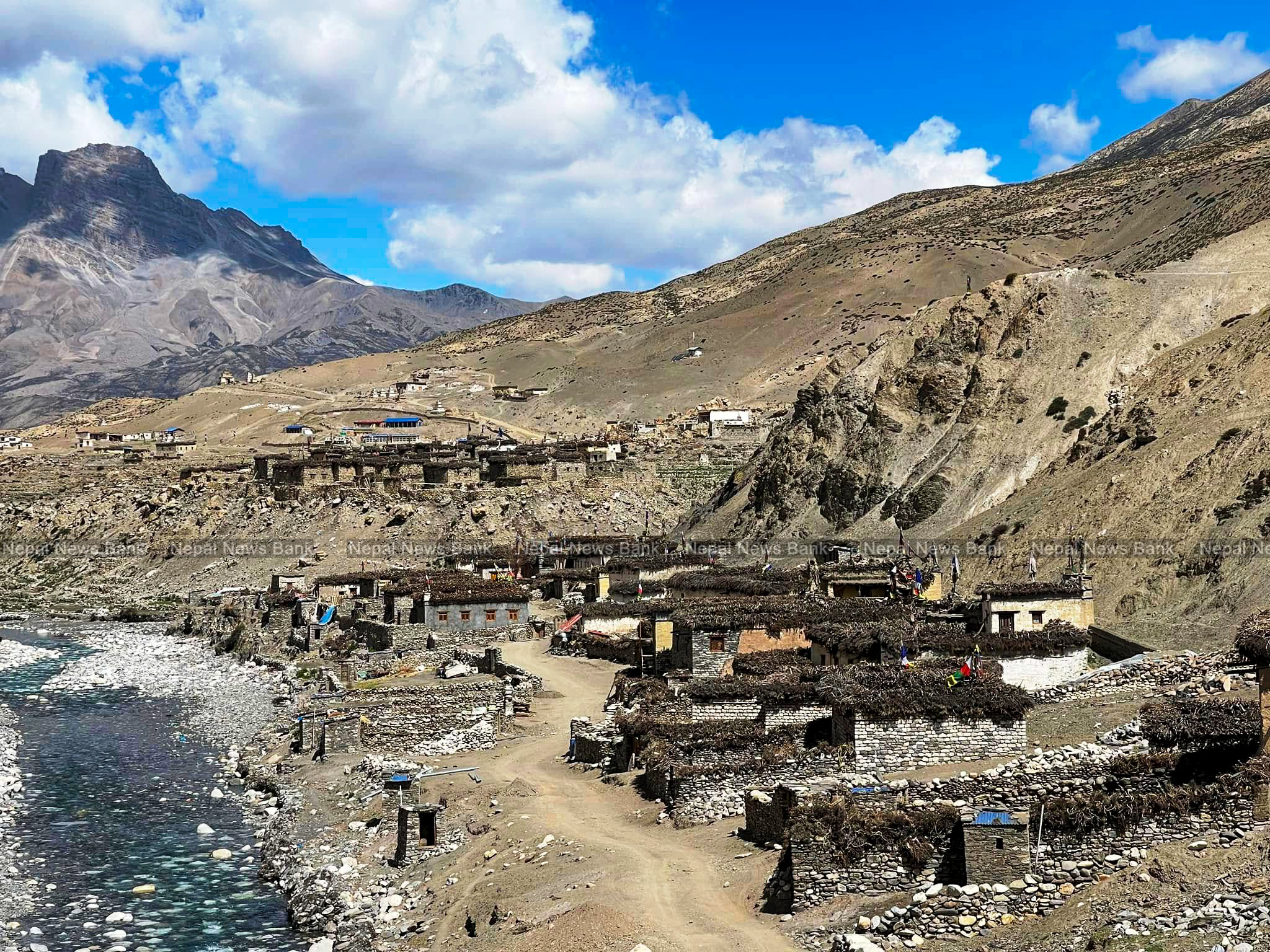
Hemanta KC / SATV, Kathmandu, October. 16- Dho Valley, Tinje and surrounding settlements in Dolpo Buddha Rural Municipality of Upper Dolpa are surrounded by towering Himalayan mountains. With snow-capped peaks, high hills, vast alpine meadows and breathtaking mountain landscapes, the region possesses exceptional natural beauty. However, the same geography that makes the area attractive also presents significant challenges for the people who live there.
Located at elevations of around 4,000 metres above sea level and higher, these settlements face freezing temperatures, a short agricultural season, limited infrastructure and difficult geographical conditions. Despite these hardships, local communities continue to sustain their lives in this remote Himalayan region.
In some parts of Dolpo Buddha Rural Municipality, snow remains on the ground for nearly six months of the year. Trees and other vegetation are also scarce in many areas, requiring residents to adapt their livelihoods to the harsh natural environment.
Mountain Settlements, Distinct Geography and Unique Ways of Life
Dho Valley and its surrounding settlements represent the distinctive Himalayan landscape of Upper Dolpa. Unlike the lower regions of Nepal, known for their green hills and dense forests, this area features expansive alpine meadows, open valleys, rocky mountains and snow-covered peaks. The dramatic Himalayan scenery surrounding the settlements defines the region's natural identity.
Dho, Tinje and neighbouring settlements within Dolpo Buddha Rural Municipality also have distinctive historical, religious and cultural characteristics. Local lifestyles, languages, traditional clothing, food and cultural practices associated with Buddhism set Upper Dolpa apart from other parts of the country.
Dho also serves as the administrative centre of Dolpo Buddha Rural Municipality. Its traditional settlements, monasteries and spectacular mountain landscapes are among the area's major tourist attractions.
The Dho Tarap Valley is recognised as one of Nepal's high-altitude inhabited areas. However, the elevation of settlements varies from place to place, according to rural municipality Vice-Chairperson Pema Dhorje Gurung.
Rich in Natural Beauty and Tourism Potential
Upper Dolpa has the potential to become an important destination for adventure and cultural tourism because of its natural beauty, religious heritage and distinctive local traditions.
According to Vice-Chairperson Pema Dhorje Gurung, the settlements of Dho and Tinje, ancient monasteries, alpine pastures and high-altitude trekking trails could attract both domestic and international visitors interested in trekking and cultural experiences.
Tourism in Upper Dolpa should also be viewed in connection with destinations such as Shey Monastery, Phoksundo Lake, Saldang, Tinje and Dho Tarap. Together, these places offer visitors opportunities to experience spectacular natural scenery while learning about ancient civilisation, religious traditions and Himalayan lifestyles.
However, natural attractions alone cannot guarantee the growth of the tourism industry. Well-maintained trekking routes, safe accommodation, reliable communication, healthcare, drinking water and emergency rescue services are essential foundations for tourism development.
Without these facilities, expanding tourism activities remains difficult despite the region's considerable potential.
Inadequate Infrastructure Makes Daily Life Challenging
Geographical remoteness remains one of the biggest obstacles to development in Upper Dolpa. Settlements are widely scattered, the terrain is mountainous, and harsh weather conditions make it difficult to transport daily necessities, construction materials and essential supplies.
Limited access to education, healthcare, electricity, communication and transportation means that residents often struggle to obtain even basic services.
People may have to travel long distances for medical treatment, while adverse weather can make journeys difficult or impossible. These are among the most serious challenges facing communities in remote Himalayan areas.
The lack of roads, communication networks, electricity, schools and healthcare facilities continues to affect everyday life in Upper Dolpa. For tourists, inadequate safety arrangements, a shortage of secure shelters and limited emergency rescue services also pose significant risks.
Development Plans Must Reflect Local Geography
Development in Himalayan settlements such as Dho Valley and Tinje must take into account the local geography, climate and needs of the communities.
Rather than applying development models from other regions without modification, local residents believe priority should be given to environmentally friendly infrastructure, cultural preservation and sustainable livelihoods.
To promote tourism, improvements are needed in trekking trails, safe accommodation, reliable communication systems, first-aid services and emergency rescue arrangements.
Connecting local communities with tourism businesses could increase household incomes while also supporting the preservation of traditional culture and customs.
Development plans must also consider climate change and its potential effects on the fragile Himalayan environment. According to local perspectives, long-term conservation of natural resources will depend on protecting mountains, alpine meadows, vegetation and water sources while constructing infrastructure suited to local needs.
Vast Potential, but Implementation Remains Key
Dho Valley and surrounding settlements in Dolpo Buddha Rural Municipality hold considerable significance for their natural beauty, cultural heritage and adventure tourism potential. However, the region's development cannot be measured solely by the appeal of its mountains or the number of tourists it attracts.
Local residents want a future in which people can access healthcare without excessive difficulty, children receive quality education, communities have reliable communication and transportation, and households can earn sustainable incomes from local resources.
If basic services can be expanded while preserving the distinctive identity of these mountain settlements, Upper Dolpa could become more than a destination celebrated for its natural beauty. It could also emerge as a region of meaningful opportunities and sustainable development.
Achieving this vision will require coordinated efforts by local, provincial and federal governments to implement development plans suited to the unique geography and needs of the Himalayan region.
(South Asia Network Television / SANTV)