




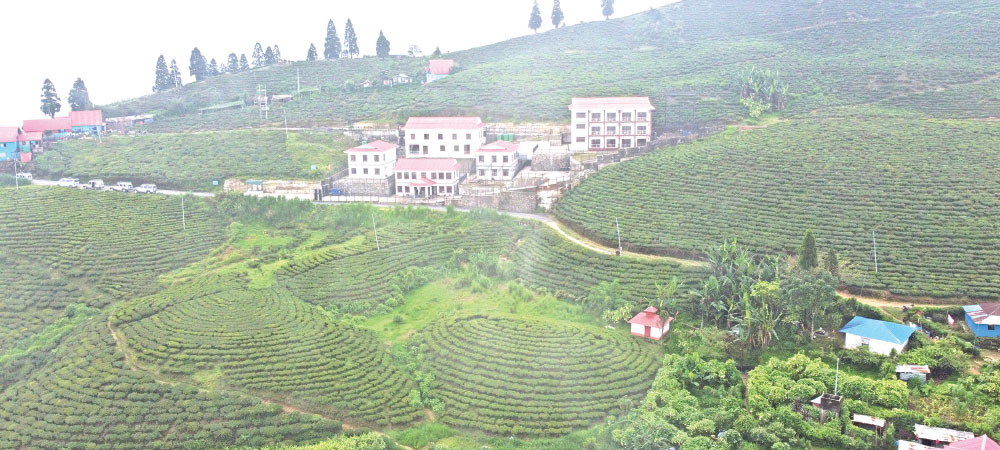
SATV, Kathmandu, Jun. 16 - As exports of Nepali tea have come to a standstill due to new standards imposed by India’s Tea Board, 65 tea processing factories in Ilam have halted production and shut down operations.
Tea entrepreneurs in Ilam stopped tea processing after exports were disrupted because of the cumbersome procedures introduced by the Indian Tea Board.
According to Dilli Rram Shrestha, president of the Suryodaya Tea Producers Association and a tea entrepreneur, 53 tea factories within Suryodaya Municipality have already closed.
According to him, all factories beyond the Mai Khola River have shut down, while 12 factories in areas including Ilam Municipality and Deumai Municipality, have also closed.
Shrestha further said that an additional 15 factories crossing Mai Khola are set to shut down from Tuesday (June 16).
According to the Suryodaya Tea Producers Association, around 250,000 kilograms of Nepali tea shipped to Delhi, Kolkata, and Siliguri in India have been held up under the pretext of testing.
At present, tea entrepreneurs have around 1.1 million kilograms of processed tea stockpiled in factories.
President Shrestha said that tea worth approximately Rs. 61.6 million remains unsold in factory warehouses due to the stockpile.
“The entire first-harvest tea has remained stuck in warehouses. As exports have stopped, industries are unable to purchase tea from farmers and make payments, forcing us to shut down the factories,” he said.
Members of the association and other industrialists have been demanding that the federal government facilitate tea exports by negotiating with India, as the local government is unable to do anything about tea exports.
Under the Standard Operating Procedure (SOP) implemented by India’s Tea Board from May 1, every consignment of tea exported from Nepal must undergo mandatory quality testing.
Entrepreneurs said the new rule has created a crisis because it takes up to 15 days to receive test reports. The tea cannot be sold until the report arrives, and it must be destroyed if the report shows low quality or excessive pesticide residue.
Under the new arrangement, every container of Nepali tea exported to India now requires mandatory laboratory testing. Previously, testing one shipment would allow entry permits for tea carried in up to ten vehicles.
Tea that was earlier exported based on partial sample testing must now undergo separate testing for each vehicle and each shipment, making the export process more difficult and expensive.
Tea entrepreneur Gopal Kattel said each laboratory test costs 11,500 Indian rupees and reports take more than 15 days to arrive, making the process troublesome.
According to him, tea exporters must either keep tea inside vehicles or store it in warehouses during the testing period, increasing costs to the point that exports are no longer viable.
Nepali tea entrepreneurs have been demanding that India revise the policy.
Kattel said this crisis affects not only tea processors but also farmers, urging the federal government to immediately coordinate with India.
“If this problem in the tea sector continues, tea farmers in Ilam may face hunger. The government is already late in paying attention,” Kattel said.
Tea entrepreneur Uaday Chapagain said tea processed by his Gorkha Tea Industry is being exported smoothly to countries other than India.
According to him, tea has passed quality tests and is being exported without obstacles to seven countries, including Germany and the United Kingdom, while India has rejected it.
“My factory is still operating today, but as everyone else’s tea exports are blocked, I am uncertain whether I should continue operating or shut down as well,” Chapagain said.
Chapagain added that industrialists can no longer solve the problem on their own and stressed the need for high-level talks to resolve the export issue.
He claimed that the Indian Tea Board’s intentions behind the testing procedures appeared questionable.
India has been obstructing Nepali tea imports, claiming low quality and excessive pesticide content.
However, while India raises concerns about Nepal’s processed tea, it continues purchasing Nepal’s green tea leaves. Entrepreneurs claim these green tea leaves are taken to India’s Okayti area and sold in the international market under “Darjeeling Tea” brand.
Akriti Rai, a tea farmer from Suryodaya Municipality-4, said factories returned the tea she had harvested and delivered, causing losses to farmers’ investments.
As tea is the primary source of income for many households, farmers and labourers are facing serious difficulties as tea sales have stopped.
Earlier, Suryodaya Municipality had sent a letter to Ministry of Foreign Affairs of Nepal requesting diplomatic intervention to resolve the issue.
Acting Mayor of Suryodaya Municipality, Durga Kumar Baral, emphasised that the federal government should engage in dialogue with Indian authorities to find a long-term solution.
According to the National Tea and Coffee Development Board, Nepal exports around 15,600 tonnes of tea annually, of which 86 per cent goes to India. Tea cultivation takes place in 31 districts of Nepal, including Jhapa, Ilam, Panchthar, and Dhankuta.
Organic and orthodox tea produced in these districts is internationally recognised for its quality. A significant portion of Nepal’s tea exports also reaches third countries via India.