




Foreword
When I first heard about the massive landslide and flash floods on the Nepal-China border this past Wednesday, I was shocked and deeply sad.
I studied Nepali as an undergrad, so Nepal has a special place in my heart. I’ve always felt that the people there are warm, genuine, and grateful. That’s exactly why I chose to continue my research on Nepal after graduation – I want to understand it better, share its stories with more people, and maybe one day, actually help.
But after I scrolled through social media, honestly, I was left with more disappointment and even anger than sadness.
Sad because both countries lost so much. Angry because some people, without knowing the facts, jumped straight to blame games and nasty accusations. Instead of caring about rescue efforts, they rushed to vent their own opinions (and probably chase clout).
These folks – and I hope they’re actually a tiny minority – not only smear China and upset Chinese readers like me, but they also lower the international image of the Nepalese people, making them seem irrational (simply following somebody). It hurts the friendship between our two countries.
We have a term in Chinese: “keyboard warriors.”
They act all high and mighty online, commenting on everything with sharp, extreme, and hurtful words. They rarely consider how others feel or how complex a situation really is. It’s a cheap way – just a few clicks – to feel morally superior.
But everybody has to draw the line somewhere.
In the face of such a huge disaster and unreasonable remarks, I can't stay silent. As a Chinese citizen, I want to state the objective facts to help everyone understand the truth of the matter. And as someone who loves Nepal, I want to defend our friendship and call for more fair and objective voices.
What Actually Happened?
According to the USGS, the disaster was triggered by a glacier-ice collapse on Langtang Lirung's north side, at about 7,200 meters high. The energy released was equivalent to a ~M5.2 earthquake.
So what was first recorded as an earthquake was mostly seismic waves from the collapse.
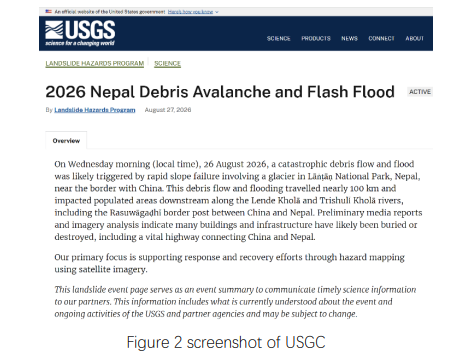
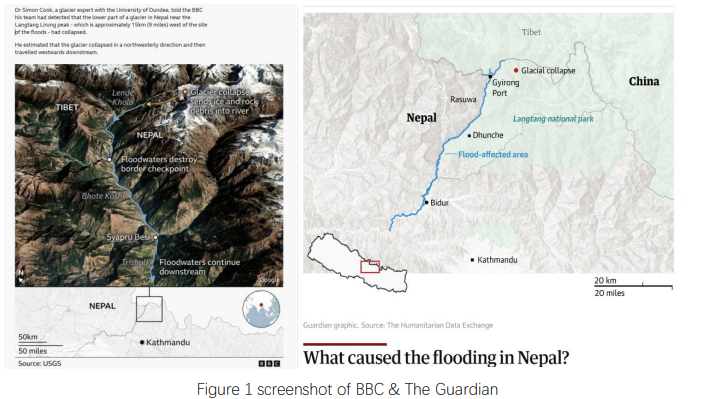
The chain reaction was:
High-altitude glacier-bedrock collapse → ice-rock-snow mixture racing down → slamming into the river and blocking it → the dam bursts → massive amounts of mud, boulders, and ice are sent downstream → a devastating ice-rock-mud flow rushes down the Lhende Khola-Bhote Koshi-Trishuli valley → hitting Nepal's Rasuwa district and China's Gyirong Port.
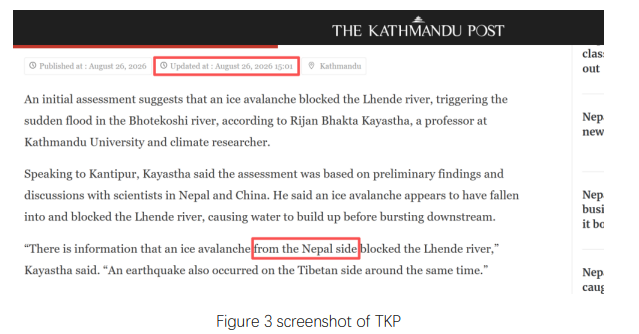
By Aug. 26, 3:01 PM, The Kathmandu Post quoted KU glacier expert Prof. Rijan Bhakta Kayastha saying a snow avalanche on the Nepal side blocked the Lhende River.
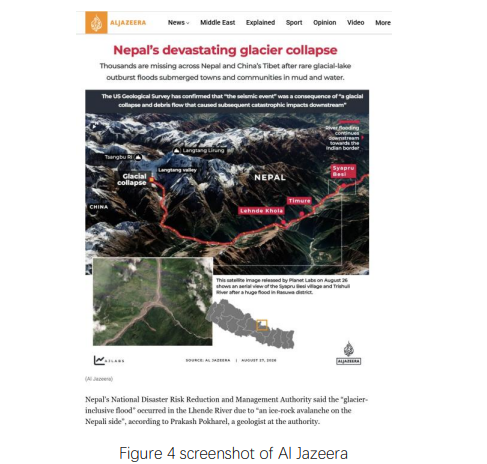
Later, geologist Prakash Pokharel from Nepal's NDRRMA analyzed satellite images and confirmed it was an ice-rock avalanche originating on Nepal's side in the Langtang Lirung area.
The Bottom Line: This Was a Natural Disaster
This was a natural disaster. An act of nature.
When the facts aren't even clear yet, is it really fair for some netizens to throw blame around?
Even after the information was released publicly, some netizens remained stubbornly opinionated. Many of these netizens were not Nepalese, yet they seemed to possess all the information and were spreading it widely online, leading some Nepalese friends with unclear logic also to criticize China.
There's a saying: “Let professionals do their job.”
Maybe we should wait for objective analysis rather than make irresponsible remarks which may cause more trouble.
Contacting friends in Nepal to check on their safety and offering donations are more appropriate than arbitrarily shifting blame online.
Dr. Dhananjaya Regmi, a geologist and MP, said Nepal's early warning system has serious gaps.
A recent study found about 2,070 glacial lakes in Nepal – 47 high-risk, with 21 in Nepal, 25 in China, and 1 in India.
Cross-border management is complicated. And right now, none of Nepal's 21 high-risk lakes have early warning systems.
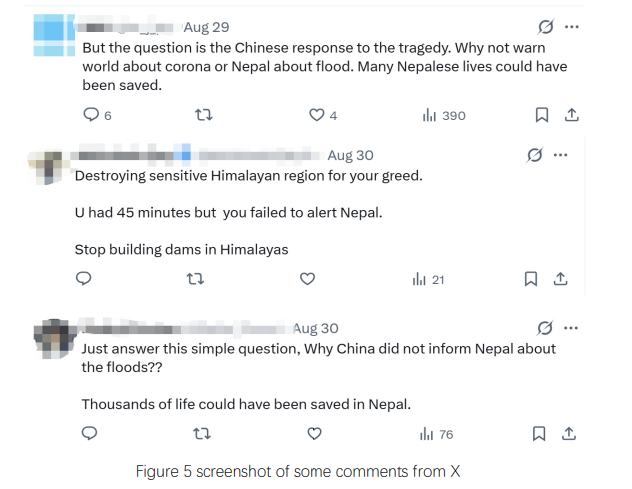
Why Didn't China Warn Earlier?
Some netizens ask: Why didn't China warn earlier?
First, a mere seven-minute reaction time is far too short to give any warning at all.
Second, the disaster started on Nepal's side. Cross-border warnings involve procedures I don't fully understand, but clearly they need cooperation from both sides. Not only does it need China's support, but it also needs Nepal's support even more.
Third, I checked and found that China has been setting up warning systems in high-risk Himalayan areas, though it's a work in progress. It takes time, but we're trying.
The Himalayas are a shared global concern, and the high-altitude conditions are harsh – but China is doing its best.
Finally, nature is unpredictable. It reminds us just how small we really are.
Even Japan, with decades of earthquake/tsunami experience and advanced technology, can't predict everything precisely.
When disaster strikes, we should unite and help, rather than blame.
What About the Claims That China's Infrastructure Projects Triggered the Disaster?
Some netizens are claiming that China's infrastructure projects on the plateau triggered this disaster – but let me address that directly.
First, media outlets from Nepal, India, the UK, the US, Saudi Arabia, and elsewhere have all confirmed that this was caused by global warming – melting glaciers triggering an ice collapse.
And what is global warming?
It's the environmental price we've paid for rising modern living standards worldwide – the First and Second Industrial Revolutions left us with serious environmental damage, and today we have to ask: is the Paris Climate Agreement even still alive?
China has overfulfilled its UN-mandated carbon emission reduction targets.
Second, there is no mining activity whatsoever in the Gyirong Port area in Tibet.
There is a company called “Chifeng Jilong Gold Mining Co., Ltd.” (short for “Chifeng Gold”), but that operates in Inner Mongolia, not Tibet.
The only thing it shares with Gyirong Port is the character “吉隆” (Jilong) in its Chinese name, and I genuinely cannot make up something that doesn't exist, so I don't know how some people manage to turn a simple name similarity into a false accusation.
Third, the construction of Gyirong Port was decided through joint studies and discussions between Chinese and Nepali engineers and experts.
Historically, this route has been the corridor connecting our two countries for over a thousand years.
Gyirong has been hit by natural disasters before, but time and again, after every catastrophe, the people of both nations have chosen to repair and reopen this port, because it reflects our shared desire for connection, trade, and a better life together.
So when I see some people blaming the disaster on this very vision – on something both our peoples have worked for and hoped for – I have to seriously question:
What is their real intention?
Who benefits when this port is lost?
Who's fanning the flames?
Are they genuinely concerned about the victims and the environment, or are they using the shared grief of Chinese and Nepali people to score political points in the court of public opinion?
“You can't wake a person who's only pretending to be asleep.”
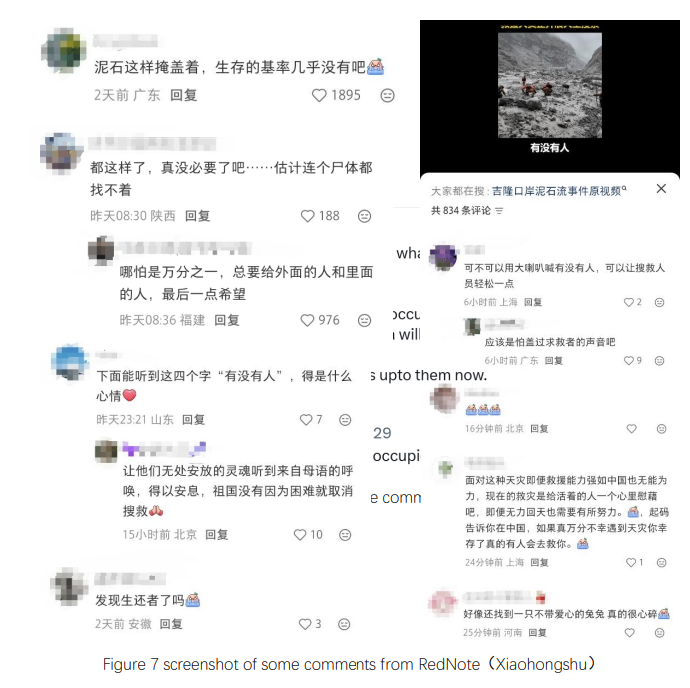
When disaster strikes, we should not blame, but unite to cope with it.
What Did We Lose?
We lost friends and family.
Even if most were strangers, we mourn every life because we are all human.
As of now, about 700 confirmed dead on both sides, with over 3,000 missing.
Behind every number is a family torn apart – regardless of nationality or ethnicity.
On the Chinese side, 261 of the 546 missing persons have been confirmed as foreign nationals, and the remaining 285 are presumed to be Chinese citizens.
Missing people include local villagers, port workers, traders, and travelers.
On the Nepal side, nearly 100 Chinese citizens are also missing.
When nature strikes this hard, we're tiny.
Survival odds? Nearly zero.
But China refuses to walk away.
“Even if it's just a one-in-ten-thousand shot – we owe it to the people waiting outside, and the people still in there – to hold on to that last thread of hope.”
So where does this “China conspiracy theory” even come from?
Would China sacrifice hundreds of its own people – compatriots, brothers and sisters – for some political gain or retaliate against whom?
That has never happened in Chinese history, and it never will.

We also lost a port.
Gyirong Port is a key land port between China and Nepal.
This port was mainly funded by the Chinese government, with total infrastructure investment exceeding 1.2 billion yuan.
For Nepal, it shortens trade routes – about 120–130 km from Kathmandu – and serves as a backup to Zhangmu Port.
For China, it can promote bilateral trade and exchanges through Tibet.
It is important for both of us.
After the 2015 earthquake severely damaged it, China led the reconstruction.
On July 8, 2025, a glacial lake breach caused flooding that destroyed the Friendship Bridge and other structures.
China again undertook the repair work.
People should have memories and feelings.
When you do something without bragging, it's a way of being considerate to a friend.
But if the friend ignores it, it can be hurtful.
Over time, can that friendship survive?
So when considering this question, perhaps we can ask ourselves:
Who does “we” include?
Figure 8. Screenshot from RedNote (Xiaohongshu) What Has China Actually Done?
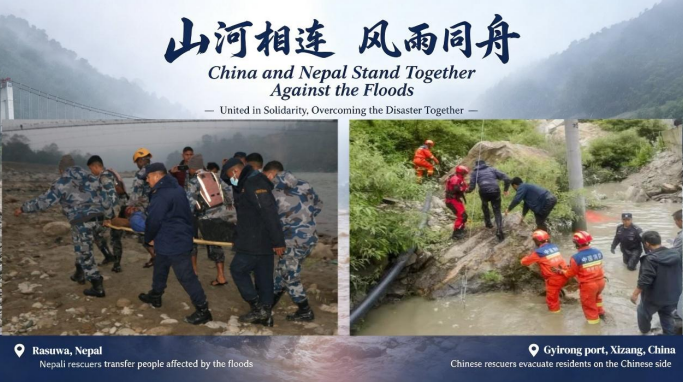
While dealing with its own casualties and rescue challenges, China quickly sent aid to Nepal.
Premier Li Qiang personally went to the front line.
The Politburo held a special meeting to coordinate emergency assistance and international rescue cooperation.
China sent 13,200 relief items, including tents, dry food and first-aid kits – about 50 tons in total.
China dispatched tunnel rescue experts.
China shared real-time information with Nepal from the very start.
China was also hit hard, but it still lent a hand.
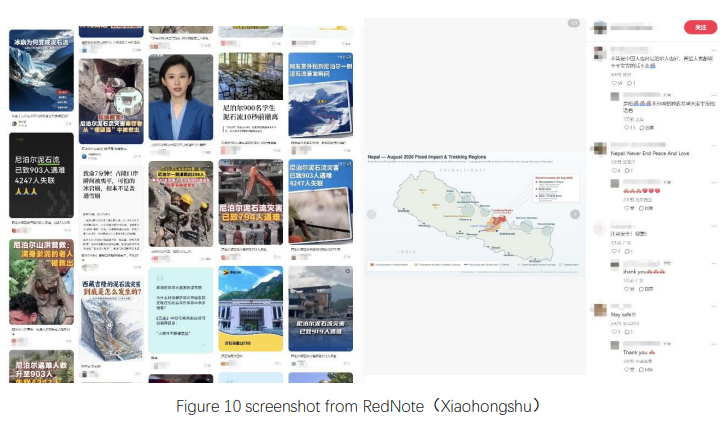
On the people's level, Chinese media gave numerous coverage, and social media flooded with prayers and concern – not just for Chinese victims, but for everyone affected.
In the face of disaster, lives have no borders, and compassion shouldn't be clouded by politics.
Many Chinese people care deeply about Gyirong Port – and equally about Nepal.
Some have visited Nepal and hold fond memories of its warm people; others have never been but still feel the pain of mountain communities suffering.
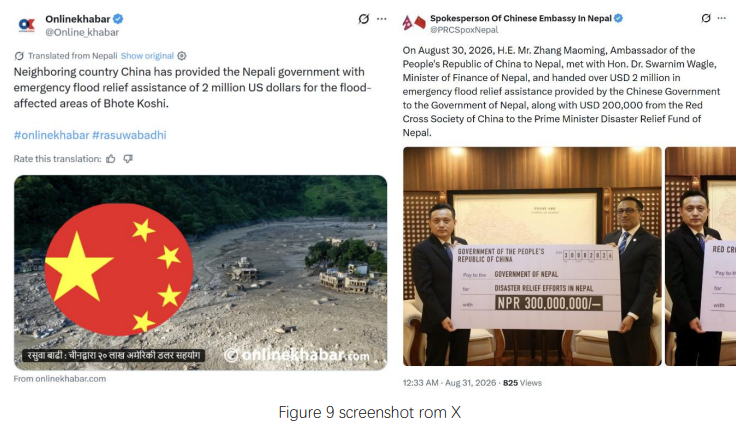
Back in 2015, after Nepal's earthquake, China mounted its largest-ever overseas humanitarian operation – unprecedented in scale.
We immediately sent 140 million RMB worth of supplies, then another 3 billion RMB (about $483 million) for post-earthquake reconstruction from 2016 to 2018.
Beyond official aid, Chinese citizens – including my fellow Nepali-studies seniors – raised funds, sold handmade postcards, and did everything they could to help.
2015 was a pivotal year.
Nepal had two big neighbors, and both did quite “a lot”.
It's only been ten years – surely Nepali people haven't forgotten.
Why does China go all out to help?
Are we some rich fool with money to burn?
Of course not – we know poverty well!
China is less than 80 years old as a nation.
We still remember our own hard times – being tech-blocked, silenced internationally – even today.
We've been through storms, so we want to hold an umbrella for others.
Having suffered, we want to ease others' suffering.
We have not forgotten the help of our Nepali friends, either.
When China was struck by a massive earthquake in 2008, the Nepali government and its people generously donated money and supplies to support our disaster relief efforts, which is a true testament to the brotherly bond between our two nations.
But this very friendship, this goodwill between China and Nepal, has been twisted and misrepresented by certain people with malicious intent.
What exactly are they trying to achieve?
What is their real agenda?
When I was in Nepal in fall 2023, I still saw Chinese-aided projects at the Durbar Square.
On the road to Bhaktapur, a driver proactively pointed out a highway built with Chinese help.
“China-Nepal friendship forever” was carved on a stone pillar right in the middle of the road in Kathmandu.
I believe most people remember – they haven't forgotten our shared history and friendship.
But now, when we're both reeling from the disaster, China is instead getting doubt and insults from some Nepali voices – doesn't that sting?
How could that not be disheartening?
I know many Nepali friends don't think like this.
But browsing Nepalese media outlets and newspapers, I rarely see news of mutual assistance between China and Nepal; while reading comments from netizens on the X platform, there's far too much slander against China.
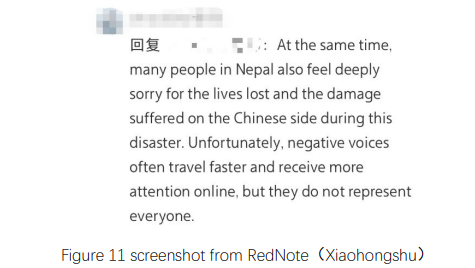
I don't know the identities of these netizens, or their motives.
But if they are Nepalese netizens, it's like a brother stabbing you in the heart.
As a Chinese student who holds Nepal close to my heart, I sincerely hope our Nepali friends can stay clear-headed and calm – look at this disaster objectively, and not be manipulated by those with ulterior motives into saying things you might later regret.
In the face of tragedy, we should not point fingers at each other.
Instead, let us support one another, help each other, stand together in the same boat, and get through these difficult times together.
Conclusion
When disaster strikes, we should not blame each other.
We should remember the people who are missing.
We should help the people who are suffering.
We should let professionals investigate what happened.
And above all, we should not allow misinformation, political agendas, or online anger to destroy the friendship between ordinary Chinese and Nepali people.
The Himalayas do not belong to one country alone.
Neither does human compassion.
— A Chinese student who cares deeply about Nepal
Additional Source