




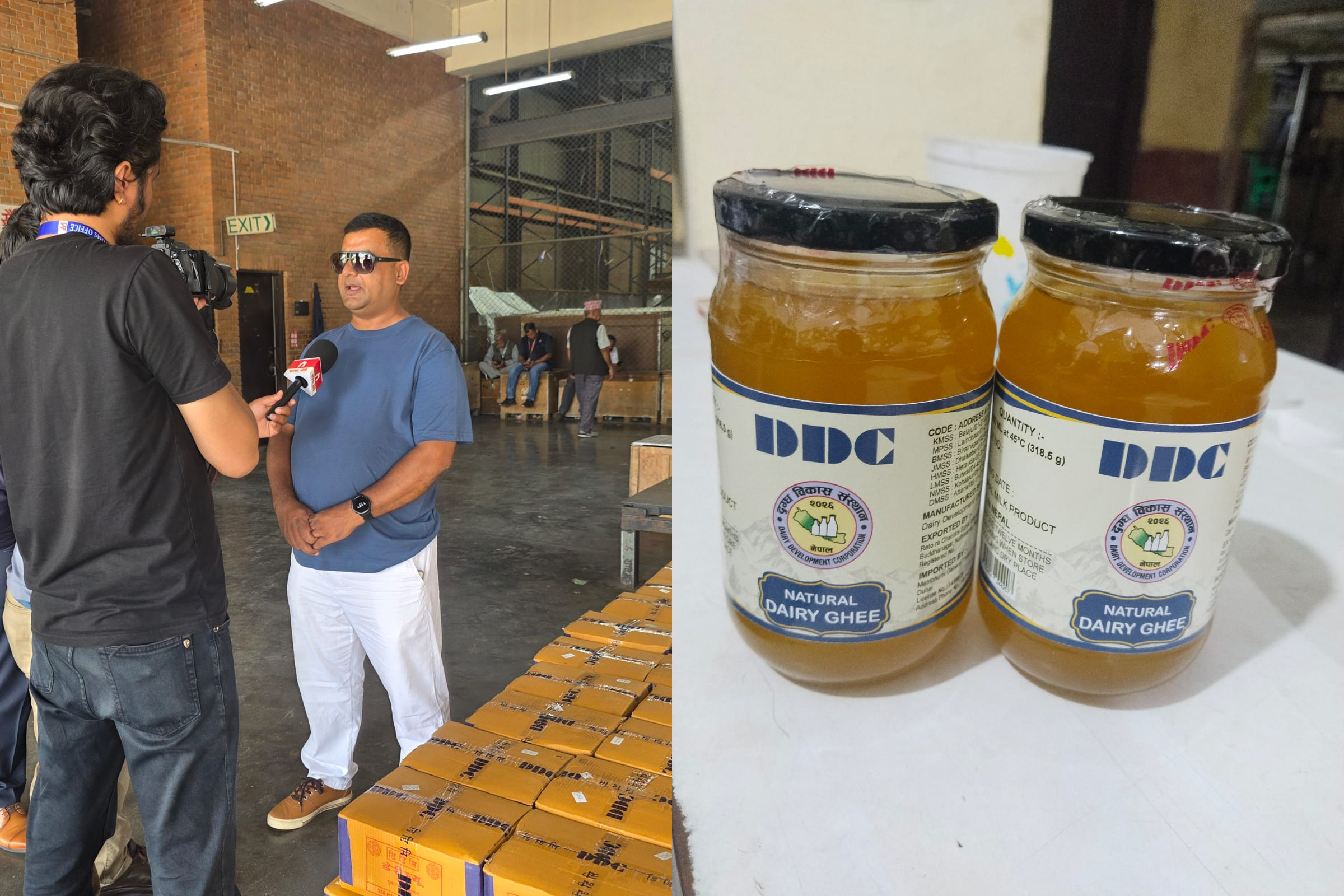
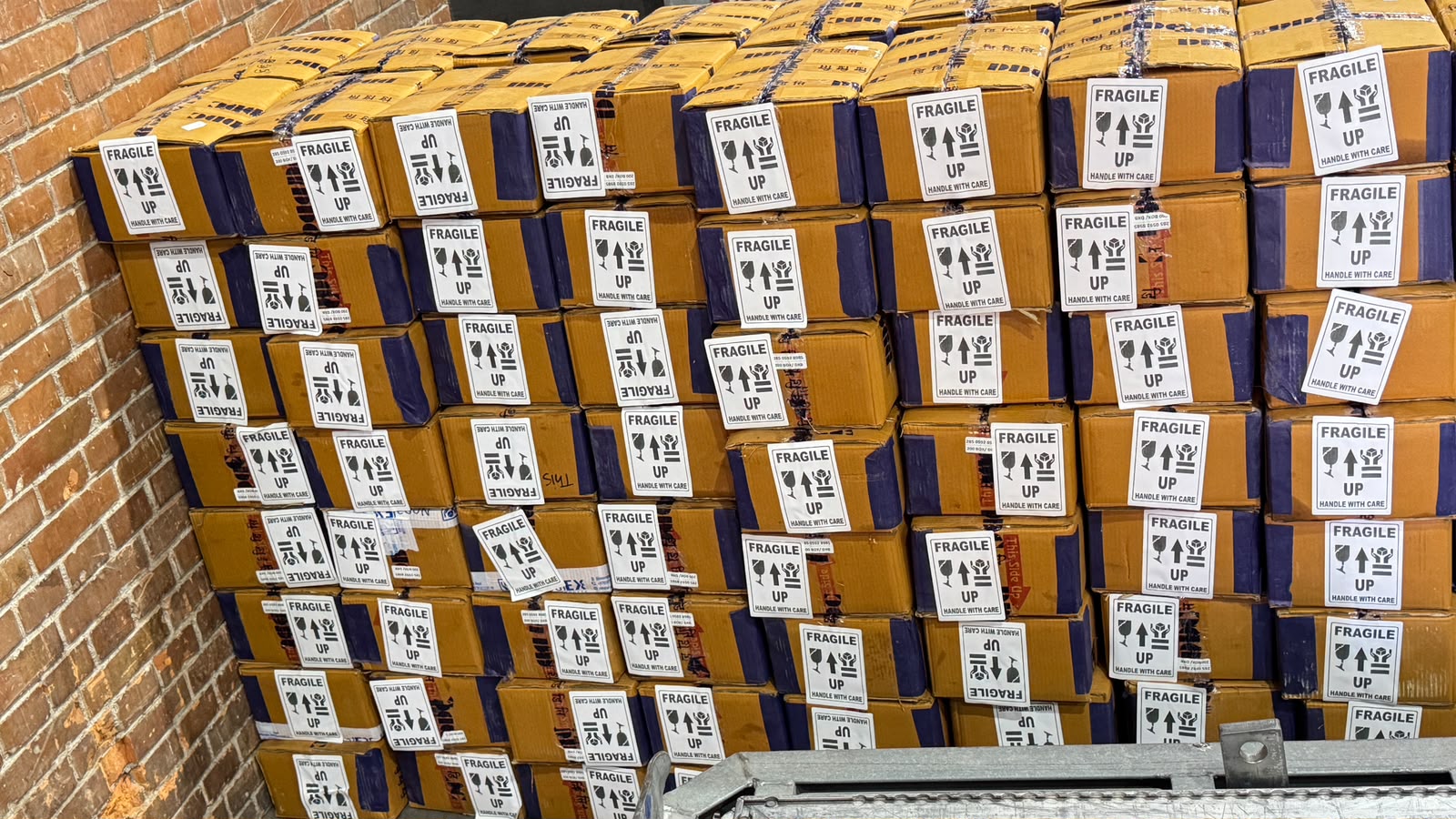
SATV, Kathmandu, October 9- Efforts to bring Nepal’s dairy products and indigenous agricultural produce to international markets are gaining momentum. Rato Chandra Surya International Pvt. Ltd., which initially exported ghee produced by the Dairy Development Corporation (DDC) on a trial basis a few months ago, has accelerated its market expansion in Dubai, United Arab Emirates (UAE). The company says it has exported approximately 2,500 kilograms of ghee to date.
Alongside ghee exports, the company has exported 150 kilograms of yak cheese to Dubai for the first time. According to the company, the initial shipment aims to promote the product and expand the market for Nepali goods. The company has also finalized preparations for exporting chhurpi, a traditional Nepali dairy product.
With the objective of establishing Nepali dairy products in international markets, the company is seeking to expand exports beyond ghee to include yak cheese and chhurpi. Its plans extend beyond dairy products, with efforts also underway to bring indigenous crops and agricultural produce grown by Nepali farmers to global markets.
Rato Chandra Surya International initially exported DDC ghee to Dubai on a trial basis. Following the initial shipment, the company expanded exports in response to market demand and has now exported approximately 2,500 kilograms of ghee. Alongside the expansion of its ghee business, the company is diversifying its range of Nepali products. Its first shipment of 150 kilograms of yak cheese marks the beginning of efforts to promote the product in Dubai, while preparations for exporting chhurpi have reached the final stage.
Expanding the international market for yak cheese produced in Nepal’s Himalayan regions and traditionally prepared chhurpi could create new commercial opportunities for local products. However, sustained supply, consistent quality and compliance with international food safety standards will be essential to achieving long-term success.
dd1
The company says it is also exporting indigenous crops and agricultural products sourced from Nepali farmers alongside its dairy products. Its goal is to establish locally produced goods in international markets through quality packaging and effective branding.
At a time when many agricultural products grown in Nepal struggle to secure adequate market access and fair prices, connecting them with new international markets through exports could create significant opportunities. Maintaining product quality and developing packaging and branding that meet international consumer expectations could further strengthen the competitiveness of Nepali products.
The company says it is giving particular attention to product quality and packaging in response to market demand. Its strategy is to position Nepali agricultural and dairy products not merely as commodities, but as quality-assured products with distinctive identities and recognizable brands in the global marketplace.
Rato Chandra Surya International claims that purchasing products directly from farmers for export will help producers receive fair prices. According to the company, direct procurement and access to international markets can expand sales opportunities and strengthen the connection between farmers and consumers.
Linking local production with exports could broaden market access for farmers. However, the long-term impact of such initiatives will depend on the continuity of exports, the actual prices received by farmers, consistent product quality and the sustainability of market demand.
The company aims to take Nepali products to global markets with international-standard packaging and branding while addressing these factors.
Matribhoomi General Trading is assisting Rato Chandra Surya International with marketing and market expansion in Dubai. The company is supporting efforts to establish recognition for Nepali products in the local market and increase their reach among consumers.
According to Prakash Chandra Ghimire, Managing Director of Rato Chandra Surya International, the company aims to expand into international markets by focusing on the quality, packaging and branding of Nepali products.
The company's export journey, which began with ghee, has now expanded to yak cheese. It is also preparing to include chhurpi and indigenous agricultural products in its export portfolio. The next major priorities will be converting initial market demand into regular business, maintaining product quality and securing sustainable market access for farmers' produce.
If these efforts continue successfully, they could open up broader opportunities for Nepali dairy products and indigenous agricultural produce to establish a stronger presence in international markets.