




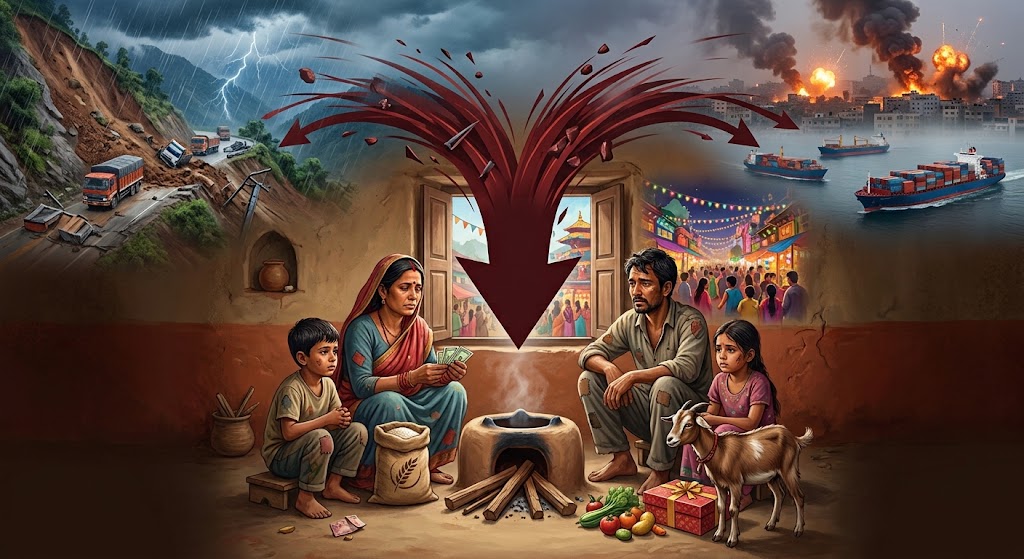
SATV, Kathmandu, October 14-Dashain traditionally brings new clothes, delicious food, family reunions and a festive atmosphere to Nepali homes. After a year of hard work, people look forward to spending a little extra on their families, preparing special meals and sharing happiness with relatives. But this year, for many Nepalis, simply managing everyday expenses has become a greater challenge than fulfilling their festive wishes.
Caught between natural disasters, instability in international markets, economic pressures arising from the conflict in the Middle East, transportation disruptions and weak domestic market regulation, ordinary consumers are bearing the burden of rising prices on multiple fronts. As the cost of daily necessities climbs alongside the usual seasonal increase in demand, inflation is casting a shadow over the joy of Dashain.
Whether buying new clothes or arranging rice, lentils, cooking oil, vegetables and meat for the kitchen, households are having to spend more. With incomes failing to rise at the same pace, consumers say they are being forced to cut back on their needs. For some families, postponing plans to buy new clothes, choosing cheaper food alternatives and limiting festive shopping have become unavoidable.
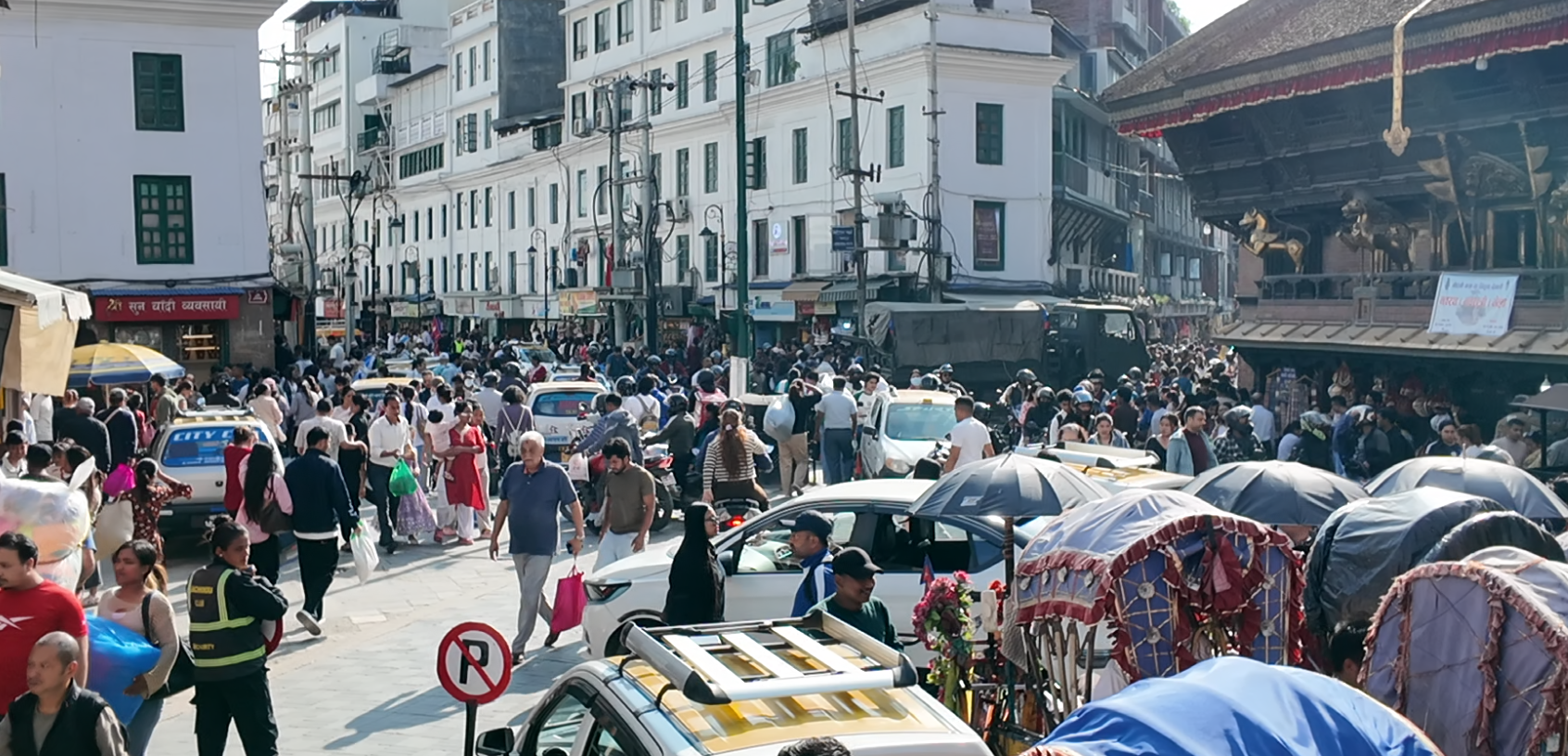
Another striking scene is emerging in Dashain markets. Large shopping centres and organised commercial outlets are seeing fewer customers than expected, while footpaths, small shops and ordinary local markets are attracting people looking for cheaper goods.
This does not necessarily mean that consumers have disappeared from the market. Rather, it signals a weakening of their purchasing power. Consumers are still shopping, but they can no longer spend as freely as before, says consumer rights campaigner Madhav Timilsina.
Inflation Shrinks Dashain Shopping
Demand for clothes, footwear, food grains, fruits, vegetables and meat naturally rises during Nepal’s festive season. However, an abnormal increase in prices simply because demand is higher—and the direct burden this places on consumers—is a matter of concern.
The current price increases are particularly painful for daily-wage workers, private-sector employees, small business owners, informal-sector workers and families dependent on fixed incomes.
Padam Ghartimagar, a native of Rolpa who works at a garment factory in Satungal, Kathmandu, says it has become increasingly difficult to manage additional Dashain expenses while covering rent, education, healthcare, transportation and daily food costs from a limited income.
On one hand, families face social expectations to spend on relatives and celebrations during Dashain. On the other, prices continue to rise across the market. Consumers complain that the same amount of money that once covered their shopping needs is no longer sufficient.
Kitchen expenses have become one of the biggest pressures on monthly household budgets. Rising prices of rice, lentils, cooking oil, spices, vegetables, fruits and meat are forcing families to reduce spending in other areas. For households that already devote a large share of their income to food, even a modest price increase can create a substantial financial burden.
According to traders, consumers are increasingly shortening shopping lists to fit their budgets, looking for alternatives to expensive products and postponing purchases until the last possible moment. Such caution is also affecting businesses at a time when festive demand would normally stimulate commercial activity.
Retail Prices Rise by More Than 15 Per Cent
Pabitra Bajracharya, president of the Nepal Retailers Association, says overall market prices have increased by more than 15 per cent this Dashain.
According to Bajracharya, although supply chains have not come to a complete standstill, problems with transportation and the supply of goods have affected market prices.
Bajracharya says supply difficulties have emerged for some goods imported from China. However, she maintains that the Kathmandu Valley has food stocks sufficient for approximately three months.
This suggests that an immediate shortage of food grains is not necessarily the central problem. Price increases, distribution systems and market management are also important concerns.
According to Bajracharya, the price of rice has increased by more than Rs 600 per sack. Some retail traders, however, claim that market prices have risen by more than 30 per cent, making everyday life increasingly difficult.

Baburam Pokharel, a retailer operating in Maharajgunj, says government inaction has left ordinary consumers unable to afford essential goods. He warns that if the government fails to intervene promptly to facilitate supplies and contain price increases, the situation could deteriorate to the point of food insecurity.
Ordinary people running small businesses and working in various occupations in the capital also complain that black-market activities involving goods ranging from cooking gas to sugar have continued while the government remains ineffective. Some say they are struggling to keep their kitchen stoves burning.
The rise in rice prices, in particular, directly affects household budgets because rice is a staple food in Nepali kitchens. When such a basic commodity becomes more expensive, families must cut spending on other items just to meet their minimum food requirements.
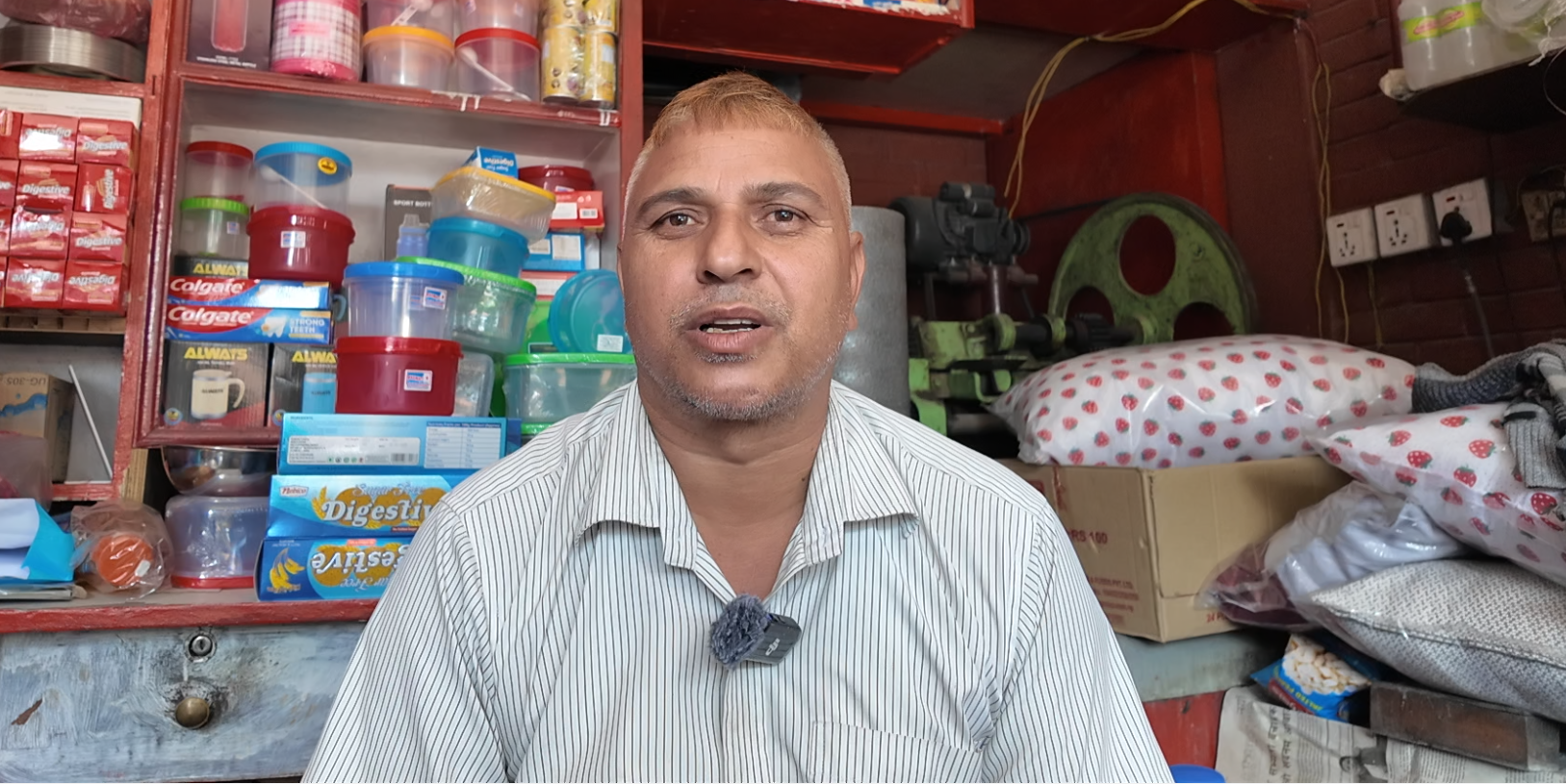
Bajracharya argues that intermediaries are playing an increasingly influential role in the market. he says the government’s limited understanding of actual supply-chain conditions has weakened its ability to intervene effectively.
According to him, proper monitoring is needed to establish where goods originate, how much value is added at each stage, how much transportation costs and how final retail prices are determined.
Without transparency regarding price increases and their causes at different stages of the supply chain, intermediaries may find opportunities to charge prices above actual costs, traders argue. Ensuring that goods are available in the market is not enough; consumers must also be able to purchase them at fair prices.
Bajracharya adds that salary increases for government employees may have offered some relief in managing expenses, but most private-sector and informal-sector workers have not experienced comparable growth in income.
When incomes remain largely unchanged while market prices continue to rise, the real purchasing power of ordinary citizens declines.
Natural Disasters Disrupt Supply Chains
The impact of natural disasters cannot be ignored when examining this year’s inflation.
The devastating flood in the Bhotekoshi area of Rasuwa on August 26, followed by persistent rainfall in different parts of the country, disrupted roads and transportation services. These disruptions affected the movement of goods, commercial activities and market supplies.
Nepal’s trading system depends heavily on road transportation. Smooth road access is essential to move goods from production areas to collection centres, wholesale markets and retail shops.
When floods and landslides block roads, deliveries are delayed, alternative routes must be used, travel times increase and transportation costs rise.
Fresh vegetables and fruits, which are particularly perishable, are especially vulnerable to such disruptions. Delayed transportation increases the risk of spoilage, while alternative routes add to costs. When traders incorporate these additional expenses into selling prices, consumers ultimately bear the burden.
However, consumer rights campaigner Timilsina cautions against attributing all market price increases to natural disasters alone.
He argues that a fact-based assessment is needed to determine how much the availability of individual goods has declined because of supply disruptions, how much transportation costs have increased and how significantly these factors have affected retail prices.
The Kitchen Gets More Expensive: Even Cheaper Vegetables Cost More
Consumers say the real impact of inflation must be assessed by looking directly at household kitchens.
Rather than relying solely on Nepal Rastra Bank’s inflation statistics, they argue, the government should also examine the everyday experiences of families, including even small increases in the prices of vegetables they purchase regularly.
As prices rise even for vegetables generally considered inexpensive, managing daily food expenses is becoming increasingly difficult.
According to the Kalimati Fruits and Vegetable Market Development Board, the price of chayote, commonly known as squash, has doubled from Rs 12.50 to Rs 25 per kilogram—a 100 per cent increase.
With the price of a regularly consumed vegetable doubling, ordinary families are being pushed to seek cheaper alternatives.
Similarly, the price of small, tunnel-grown tomatoes has increased by approximately 37 per cent, from Rs 56.40 to Rs 77.27 per kilogram.
Tomatoes are regularly used in Nepali kitchens to prepare a variety of dishes. Their rising price means that even routine cooking now requires additional expenditure.
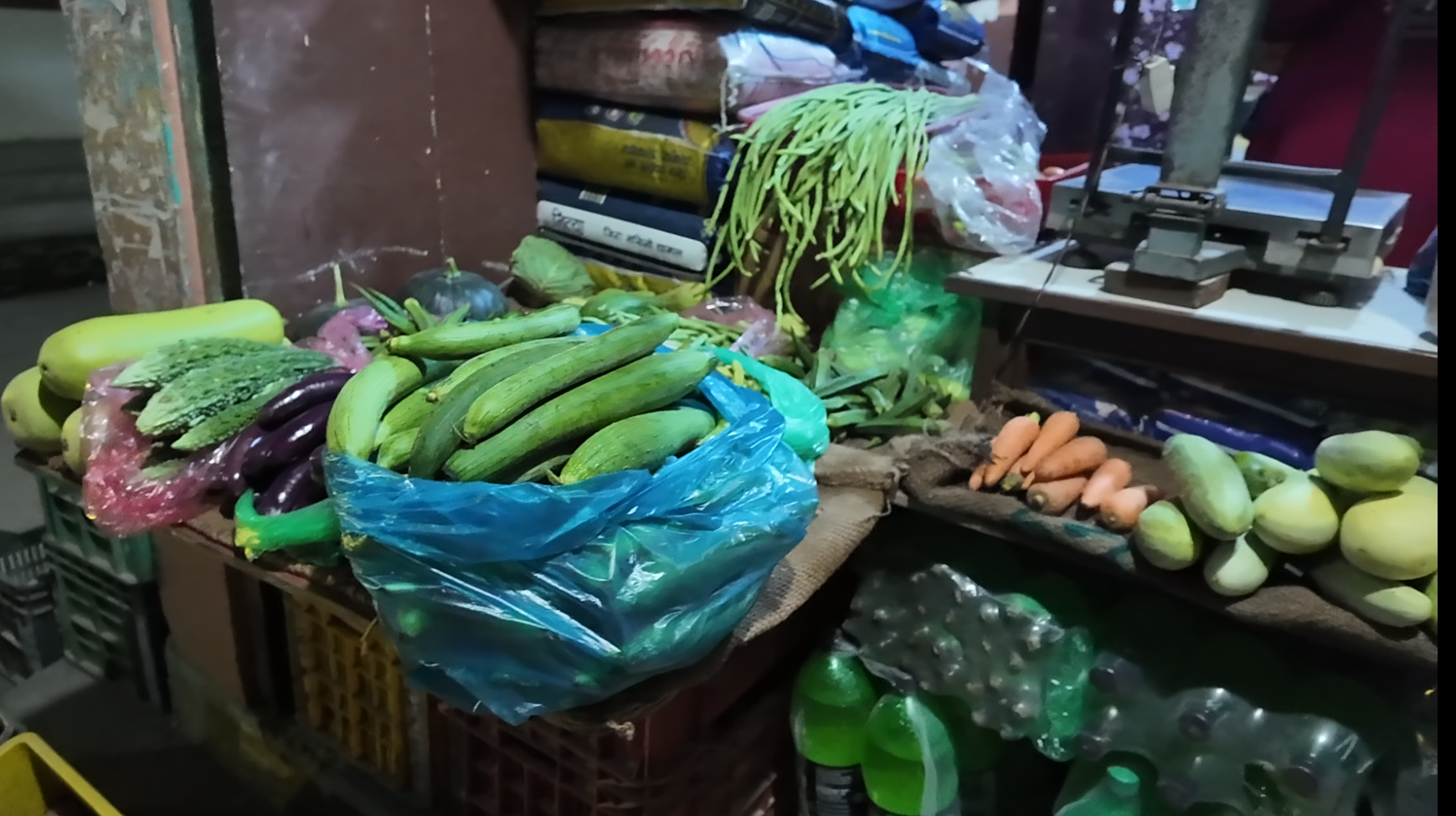
The price of locally produced cauliflower has increased from Rs 87 to Rs 100 per kilogram. While these individual increases may appear modest, their combined effect becomes significant when a household purchases several varieties of vegetables at once.
Inflation has not affected all vegetables equally. Prices of comparatively expensive products, such as mushrooms and asparagus, have also increased substantially.
Available figures show that the price of Dalle mushrooms has risen from Rs 326 to Rs 525 per kilogram, an increase of 61.04 per cent. Similarly, the price of asparagus has climbed from Rs 450 to Rs 750 per kilogram, an increase of 66.67 per cent.
Mushrooms and asparagus may not be everyday purchases for every household. Nevertheless, their substantial price increases illustrate the extent of the pressure on the market. Meanwhile, increases in commonly consumed vegetables such as squash, tomatoes and cauliflower directly affect daily household food budgets.
These prices are based on the available figures and may vary depending on the market, location, quality and time of purchase. Nevertheless, the examples highlight the inflationary pressure consumers are facing.
Goods Are Available, but Consumers Are Losing Purchasing Power
The availability of goods and consumers’ ability to afford them are two different things.
Even if food stocks are sufficient in the market, households cannot benefit from that availability if they lack the money to purchase what they need. This contradiction is increasingly evident in this year’s Dashain market.
Fewer-than-expected crowds at large shopping centres and the growing presence of customers looking for cheaper goods at footpaths and ordinary local markets are signs of this trend.
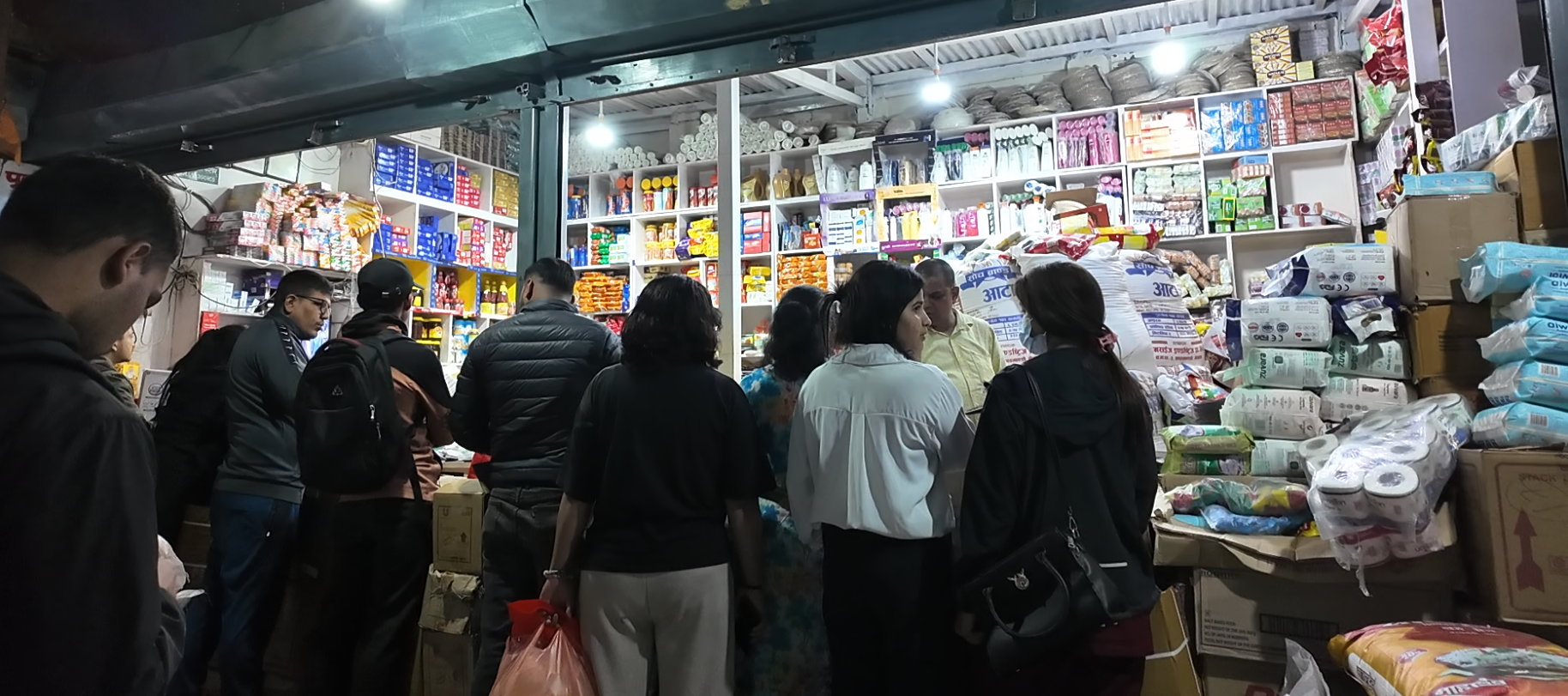
Consumers have not stopped shopping altogether. They are adjusting their choices to match their financial capacity.
Traders at major commercial centres say they are being affected by lower-than-expected customer numbers for clothes, footwear, household goods and other festive products. Meanwhile, footpath vendors and small shops offering cheaper goods appear to be attracting more customers.
Shopping at low-cost outlets is not merely a matter of personal preference for everyone. For some households, it is an economic necessity.
When families must buy Dashain clothes for every member within a fixed budget, price increasingly takes precedence over brand, quality or convenience.
Businesspeople say these changing consumer habits reflect the impact of inflation on market behaviour. Rising prices are increasing household expenditure while potentially weakening sales across the commercial sector.
When consumers cut spending, businesses face pressure. A decline in business activity can affect employment and income, further weakening consumption. In this way, inflation is not merely a kitchen-table problem; it is also connected to broader economic activity and market demand.
The Economic Shrapnel of the Middle East Conflict
Alongside natural disasters and domestic supply problems, international developments have also affected Nepal’s market environment.
The ongoing conflict and geopolitical tensions in the Middle East have contributed to higher costs and uncertainty in global energy, transportation and trade markets.
Nepal depends on external markets for petroleum products, industrial raw materials and various consumer goods. When international fuel prices rise, transportation, agricultural production, storage and distribution costs can also increase.
Similarly, disruptions to maritime shipping, higher insurance premiums and increased risks along international trade routes can add to the cost of imported goods.
The impact is not limited to fuel prices. Higher transportation costs can also place upward pressure on food grains, clothing, industrial materials and other consumer products.
Nepali consumers are not fully insulated from the risks created by international instability, including potential increases in import prices and shipping costs.
Nepal therefore needs to regularly analyse the supply of import-dependent goods, international prices and transportation costs while adopting policies to protect the domestic market from unjustified price increases.
However, consumers complain that international tensions alone cannot reasonably explain the extent of the price increases currently being experienced.
Genuine Costs or an Excuse for Scarcity?
When prices rise, traders often cite higher purchase costs, expensive transportation or delays in the arrival of goods.
Such problems can genuinely arise from natural disasters and international instability. But a single explanation cannot account for every price increase.
Bajracharya, president of the Nepal Retailers Association, has also warned that the government’s inadequate knowledge of actual supply-chain conditions and pricing mechanisms increases the possibility of intermediaries making excessive profits.
“Goods pass through several stages before reaching consumers from production sites or points of import. The costs and profits of producers, collectors, wholesalers, transporters and retailers are added along the way, determining the final price,” she says.
“If transactions at each stage are not transparent, it becomes difficult to identify the real reasons when prices rise abnormally.”
Traders themselves argue that action should be taken if investigations establish that businesses are colluding to fix prices, creating artificial shortages or charging excessive amounts under the pretext of scarcity or transportation difficulties.
At the same time, they call for an objective assessment of businesses facing genuine increases in operating costs rather than treating every trader in the same way.
The central question is whether higher prices reflect legitimate increases in costs, weaknesses in the supply chain, or opportunities for unfair profit-taking.
Answering that question requires evidence, transparent pricing and effective monitoring.
Government Must Do More Than Inspect Markets
Timilsina argues that the government must collect detailed information on the actual costs incurred as goods move from production or import points to consumers.
Regular records of wholesale and retail prices for major food grains, vegetables, fruits and other essential goods could help identify abnormal fluctuations.
Stakeholders say a system that analyses road conditions affected by floods and landslides, changes in transportation costs, available market stocks and the relationship between supply and demand could help authorities respond to price increases more promptly.
If prices continue to rise despite adequate stocks, the relevant authorities should seek detailed explanations from traders and suppliers, they argue.
Where evidence establishes unjustified price increases, artificial shortages or collusive price-fixing, action should be taken under existing laws.
However, stakeholders also caution that policies aimed at controlling prices should not further disrupt supply systems or ignore genuine increases in business costs.
They argue that the government must strike a balance between suppliers, traders and consumers while prioritising competitive markets and transparent price determination.
Effective market regulation, in other words, requires more than occasional inspections. It demands a clear understanding of how prices are formed throughout the supply chain.
When the Joy of Dashain Is Overshadowed by Financial Anxiety
Dashain is not merely a religious and cultural festival in Nepali society. It is also an occasion that strengthens family bonds, community ties and social relationships.
People who remain occupied with work throughout the year look forward to spending time with their families, meeting relatives and celebrating according to tradition.
But when the cost of daily necessities consumes a large share of household income, even preparing for a festival becomes a source of financial anxiety.
Economist Dr Khomraj Kharel says that during festive periods, it is important to look beyond general inflation figures and examine how much of a family’s income is spent on food, which price increases affect households most severely and how much their purchasing power has declined.
In such circumstances, he argues, the government must be prepared to intervene in price determination when necessary and take firm action where the situation demands it.
The evidence presented by traders, consumers and market price figures suggests that this year’s Dashain has become significantly more expensive for many households.
The government cannot afford to delay necessary measures. Otherwise, goods may remain on shop shelves and markets may continue operating, but ordinary citizens will still struggle to afford their purchases.
The shops may be open, yet household budgets may remain closed to the celebrations people have waited for all year.
Unless the pressure of inflation is addressed, the financial anxiety of Dashain may once again overshadow the festival’s joy—leaving families with limited incomes unable to celebrate as they wish.