




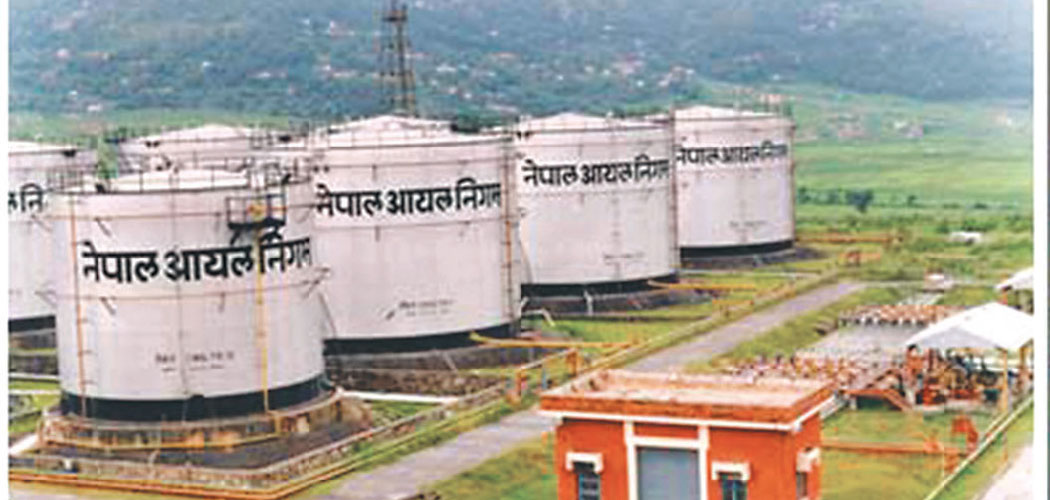
SATV, Kathmandu, Oct. 4: The Nepal Oil Corporation (NOC) has decided to keep the prices of petroleum products unchanged despite a sharp rise in their procurement costs from the international market. The corporation said the decision was taken in view of the impact of the Bhotekoshi floods, the approaching Dashain and Tihar festivals and the interests of consumers.
Despite the increase in procurement costs, the NOC board decided to retain the existing retail prices from October 1, taking into account the extraordinary situation created by the Bhotekoshi floods, the approaching festive season and the interests of consumers, said spokesperson at the NOC Manoj Kumar Thakur.
According to him, the latest purchase prices received from the Indian Oil Corporation (IOC) on Wednesday increased by Rs. 20.44 per litre for petrol, Rs. 20.21 for diesel and kerosene, and Rs. 18.66 for aviation fuel.
The price of LPG also increased by Rs. 81.32 per cylinder.
Last time, the NOC adjusted the fuel prices on July 1, 2026.
Under the revised procurement costs, the corporation estimates that maintaining the existing retail prices will result in a loss of around Rs. 3.20 billion fortnightly.
The corporation will face a loss of Rs. 26.5 per litre on petrol, Rs. 48.5 per litre on diesel and Rs. 394 per cylinder of cooking gas.
The NOC is estimated to incur a loss of Rs. 890 million from the sale of LPG alone, he said, adding that the corporation is focused on ensuring a smooth supply of petroleum products, including LPG, even if it incurs losses, while giving priority to consumers.
Thakur said that the decision was taken even though its automatic pricing mechanism could not fully adjust domestic prices in line with fluctuations in international petroleum prices amid the ongoing conflict in the Middle East.
The existing retail price of petrol has been maintained at Rs. 197.50 per litre in the first category, Rs. 199 in the second category and Rs. 200 in the third category. Diesel and kerosene prices have also been retained at the same rates. LPG remains priced at Rs. 2,060 per 14.2-kg cylinder.
For international aviation fuel sold from Pokhara and Bhairahawa, the NOC has maintained prices at the breakeven point, according to its statement.
The decision comes as households prepare for Dashain and Tihar, when travel and fuel demand traditionally rise, while many communities continue to cope with the consequences of the Bhotekoshi floods and landslides.
Thakur said that the current loss from the sale of petroleum products would be managed through the Price Stabilisation Fund, which has Rs. 4 billion.
“There is no liability for the NOC to make payments for petroleum products so far. So, there will be no financial pressure on the NOC for some time, even if it incurs losses,” he said.
Thakur, however, said that if the prices of petroleum products rise further and put financial pressure on the NOC, the corporation will be compelled to adjust fuel prices in the coming days.
LPG supply easing in Valley
Binit Mani Upadhyay, director and head of the LP Gas and Aviation Department at the NOC, said the supply of cooking gas has eased in the Kathmandu Valley in recent days.
“The supply of cooking gas has eased in the Kathmandu Valley, as the daily grievances registered at the NOC’s rapid response desk have dropped to around 70 at present. A few weeks ago, more than 600 complaints were recorded daily. This shows that consumers are getting gas,” he told The Rising Nepal.
He said vehicular movement through the Krishnabhir section had become smooth, allowing LPG bullets to regularly reach bottling plants in Kathmandu.
“LPG bottling industries based in Kathmandu have also been refilling gas at their plants and distributing it to the market smoothly,” Upadhyay said.
He said around 35,000 to 40,000 cylinders were being sold in Kathmandu at present.
Considering the increasing consumption of cooking gas during the upcoming festival and winter seasons, the NOC has requested the Indian Oil Corporation to supply at least 60,000 tonnes of LPG per month for at least six months, he said.