




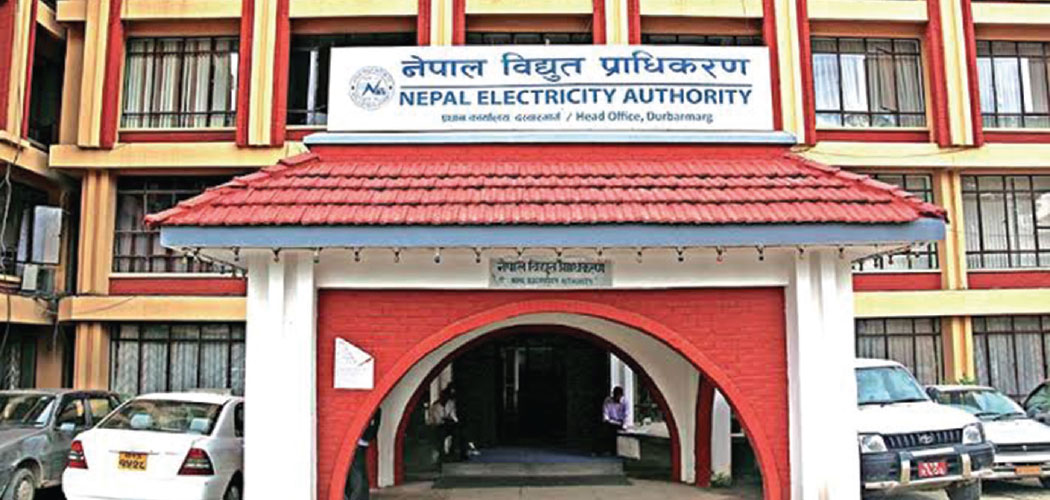
SATV, Kathmandu, Oct. 6- The Nepal Electricity Authority (NEA) has extended the Required Commercial Operation Date (RCOD) of 27 hydropower projects with a total capacity of 540 MW in the first phase, clearing the way for projects that have made genuine progress but failed to meet their original deadlines.
The RCODs were extended after assessing the actual status of projects that had signed Power Purchase Agreements (PPAs) but could not complete construction within the stipulated timeframe.
The move comes in line with the government’s policy of facilitating genuine investors and hydropower projects making tangible progress.
The NEA had classified 218 projects into four categories—‘A’, ‘B’, ‘C’ and ‘D’—based on their physical progress, RCOD status and the obligations to be fulfilled by project promoters under their PPAs. Accordingly, the process of extending RCODs for projects under categories ‘A’ and ‘B’ that have submitted the required documents and evidence has been initiated.
Minister for Energy, Water Resources and Irrigation Biraj Bhakta Shrestha had earlier held discussions with hydropower developers and said the government would facilitate genuine investors and projects making actual progress. A meeting of the NEA Board of Directors held on July 16 had decided, for the first time, to classify hydropower projects based on clear and objective criteria.
Category ‘A’ includes projects that have fulfilled the required basic obligations, while Category ‘B’ includes projects that have achieved at least 25 per cent physical progress or have faced delays in the construction of transmission infrastructure due to reasons attributable to the Authority or circumstances beyond control.
The projects whose RCODs have been extended include the Balephi-A, Upper Brahmayani, Nyasim Khola, Sona Khola, Khani Khola-1, Lower Mid Rawa, Madhya Rawa, Middle Super Daraudi, Upper Pikhuwa Khola, Khani Khola, Nupche Likhu, Sabha Khola C, Midim-1 Khola and Luja Khola hydropower projects.
The extension also covers the Upper Deumai, Phedi Khola, Nyadi Phidi, Shyam Khola, Upper Chauri Khola Small, Mewa Khola, Rahughat, Sanghu, Marsyangdi Besi, Sanghu Khola-1, Hidi Khola and Sanigad hydropower projects.
Minister Shrestha said that the government’s policy was not to create problems for the private sector but to facilitate projects that were genuinely moving ahead with construction.
He said the government was committed to developing a system in which decisions on RCOD extensions would be based on clear criteria and an institutional mechanism rather than the discretion of individuals.
Stating that the government was sensitive to the security of private-sector investment and the dignity of investors, Minister Shrestha said that developers must fulfil their obligations on time.
He said that the energy sector could progress only when mutual accountability was maintained between the government and the private sector.
According to the NEA, 320 hydropower projects with a combined capacity of 8,292 MW are currently at various stages of development. Of these, 150 projects with a combined capacity of 4,491 MW are in Category ‘A’, while 68 projects with a combined capacity of 1,420 MW are in Category ‘B’.
The remaining projects have been classified under Categories ‘C’ and ‘D’.
Category ‘C’ includes projects that have failed to obtain the required generation licence, complete financial arrangements or secure land, as well as projects with less than 25 per cent physical progress by the time their RCOD expires.
Category ‘D’ includes projects that have failed to fulfil mandatory obligations or whose survey or generation licences have been cancelled, said the NEA.
According to NEA, the projects under Category ‘B’ will be regularly monitored.
The Power Trade Department of the NEA will issue necessary directions to ensure timely completion of the projects and monitor their implementation.
If necessary, projects may be reclassified within a maximum period of six months.
The new arrangement is expected to distinguish between projects affected by genuine circumstances and those that have made little or no progress for a prolonged period. It is also aimed at facilitating private-sector investment while ensuring greater accountability in hydropower development.
Hydropower developers have long been demanding an extension of RCODs, arguing that delays in project construction are often caused by circumstances beyond their control, including problems related to transmission infrastructure, land acquisition and other administrative issues.
The first-phase RCOD extension is therefore expected to provide relief to project developers that have made substantial progress and help accelerate the development of around 540 MW of hydropower capacity.